
At a Glance
- Main subject: The historical development of the common language spoken by Mbiame, Nso and other communities in Bui
- Language: Lamnso’
- Earlier name discussed: Lam’ Mtaar
- Key historical processes: Migration, coexistence, interaction and language evolution
- Communities mentioned: Mbiame, Nso, Nkar, Nseh and others
- Important distinction: Sharing a language does not make different Fondoms the same people
- Cultural question: How did a language used by several communities come to bear the Nso name?
- Central argument: Language is only one part of a community's identity and history
Introduction
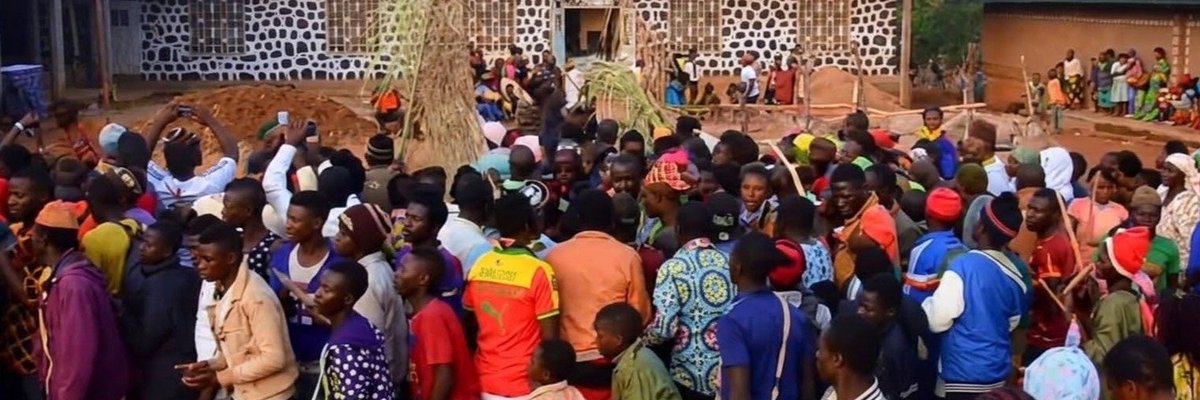
Most of the clans in Bui Division of the Northwest Region of Cameroon, including Mbiame, Nso, Nkar and Nseh, speak a closely related common mother tongue known today as Lamnso’.
This linguistic situation raises an interesting historical question:
How did communities with distinct histories, traditions and political institutions come to speak essentially the same language?
The question becomes even more intriguing when the traditional histories of these communities trace their ancestry to Kimi (Tikari), while the language spoken today does not appear to resemble what is generally identified as the Tikar language spoken by the Tikar people farther north.
Blench (2011) notes that the classification and history of Tikar remain complex and that the language may represent a divergent branch within the Niger-Congo family. Whatever the precise classification of the language associated with the people who migrated from Kimi, the language spoken today by Mbiame, Nso, Nkar, Nseh and other communities in Bui cannot simply be assumed to be an unchanged form of modern Tikar.
The more likely explanation may lie in a process common to human societies everywhere: language evolution through prolonged interaction between different populations.
The Origin of a Common Mother Tongue
The origin of the common language spoken by Mbiame, Nso, Nkar, Nseh and other communities can be examined through the broader process of language evolution.
Languages change as communities change. When populations migrate, settle together, intermarry, trade, form alliances or maintain prolonged social contact, their languages can influence one another.
Over generations, different speech forms can converge and produce a common means of communication.
This possibility is particularly relevant to the traditional history of the Bui peoples.
According to the historical account cited by Banbooyee (2001), Nchare Yen, Mboombam and Ngon’nso left Kimi in 1387 and moved in the same general direction. However, Berinyuy (2025) regrets that Banbooyee erroneously fails to mention Leh Mbijaame, a conspicuous figure in Mbiame oral history and tradition passed down from generations to generations, who was part of the fold and later founded Mbiame Fondom in 1392.
From these ancestral branches, different communities eventually developed.
Yet, among these groups, Mbiame and Nso are reported to have retained a closely related common language.
This raises the question: Why?
Banbooyee (2001:15) argues that the language brought from Kimi:
“must have been greatly affected by the coming together of so many clans, speaking different languages.”
Historically, the people of Mbiame spoke their own indigenous language referred to as the Tumur (or Twumwu) language acknowledged by National Statistics as an endangered or disappearing local language. The language is a major dialect of the Tikar language, a Northern Bantoid language spoken in Cameroon. It is primarily used by the Twumwu subgroup of the Tikar people, particularly around Bankim in the Adamawa and Tikar Regions. Nonetheless, due to geographical proximity and integration, many Mbiame locals began speaking Lam Mtaar, today known as Lamnso' which has distinct differences from the original Nso language. Banbooyee corroborates this with the view that the Lamnso’ spoken today is:
“a combination of most of the languages originally spoken by the various clans.”
This is an important observation because it presents Lamnso’ not necessarily as the unchanged continuation of one ancestral language, but potentially as the result of linguistic interaction among several populations.
The development can therefore be represented as:
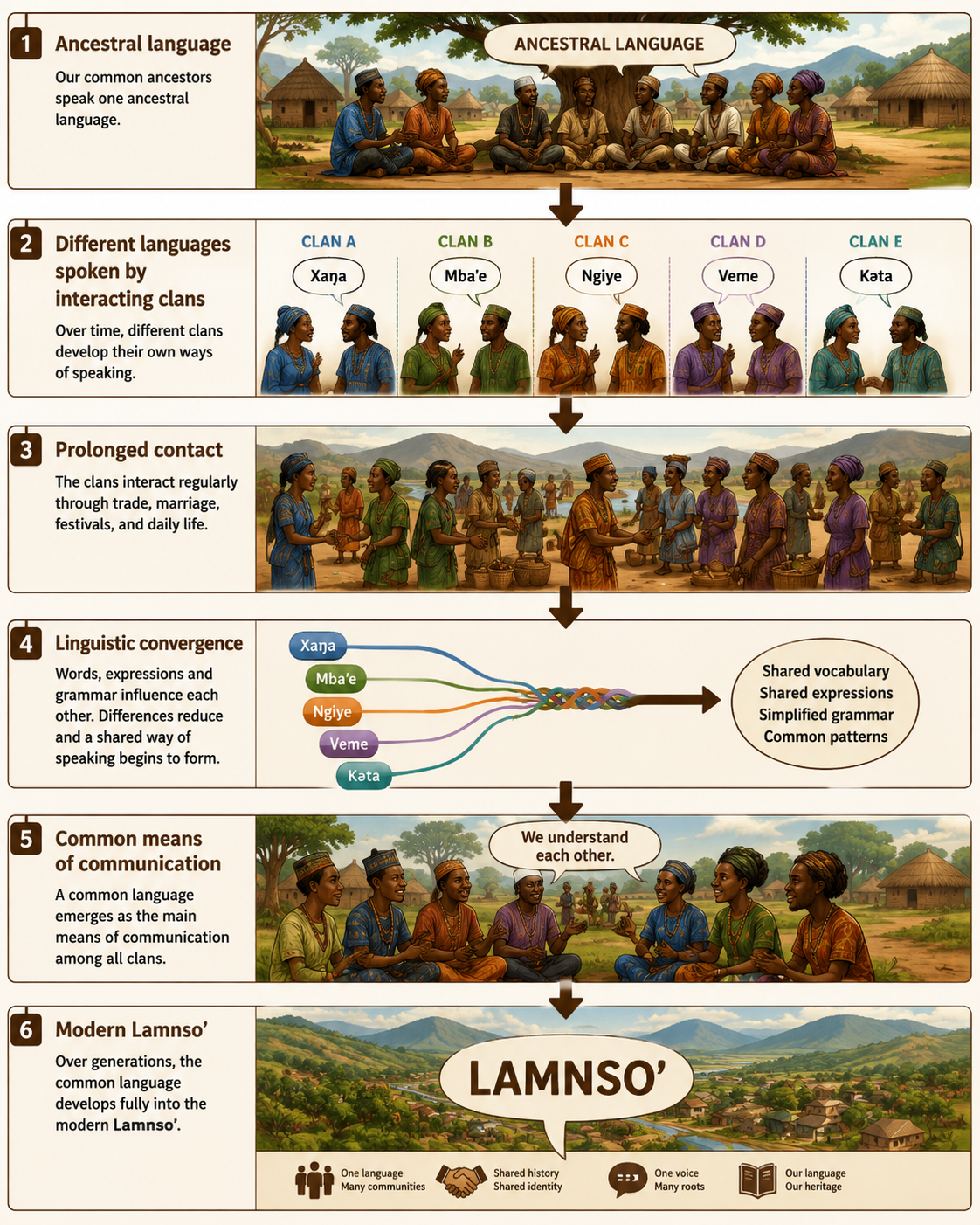
The precise historical stages require further linguistic and historical research, but the general process of language evolution provides a plausible framework for understanding the situation.
Coexistence and the Emergence of a Common Language
Berinyuy (2026:27) provides another perspective on the relationship between Mbiame and Nso.
He reports that:
“Linguistically, Nso and Mbiame speak Lamnso as their living together led to the adoption of one indigenous language as a means of communication.”
According to this account, the communities lived together before their eventual separation. Even after individual families developed their own identities and traditions, a common language had already become established as a means of communication.
This is significant because political or territorial separation does not necessarily cause linguistic separation.
Once a language becomes embedded in everyday communication, it can survive long after communities establish separate institutions, territories and traditions.
Berinyuy further maintains that what is now commonly called Lamnso’ was historically known as Lam’ Mtaar, which was adopted by Mbiame, Nso and other communities as a common means of communication.
The proposed development can therefore be understood as:
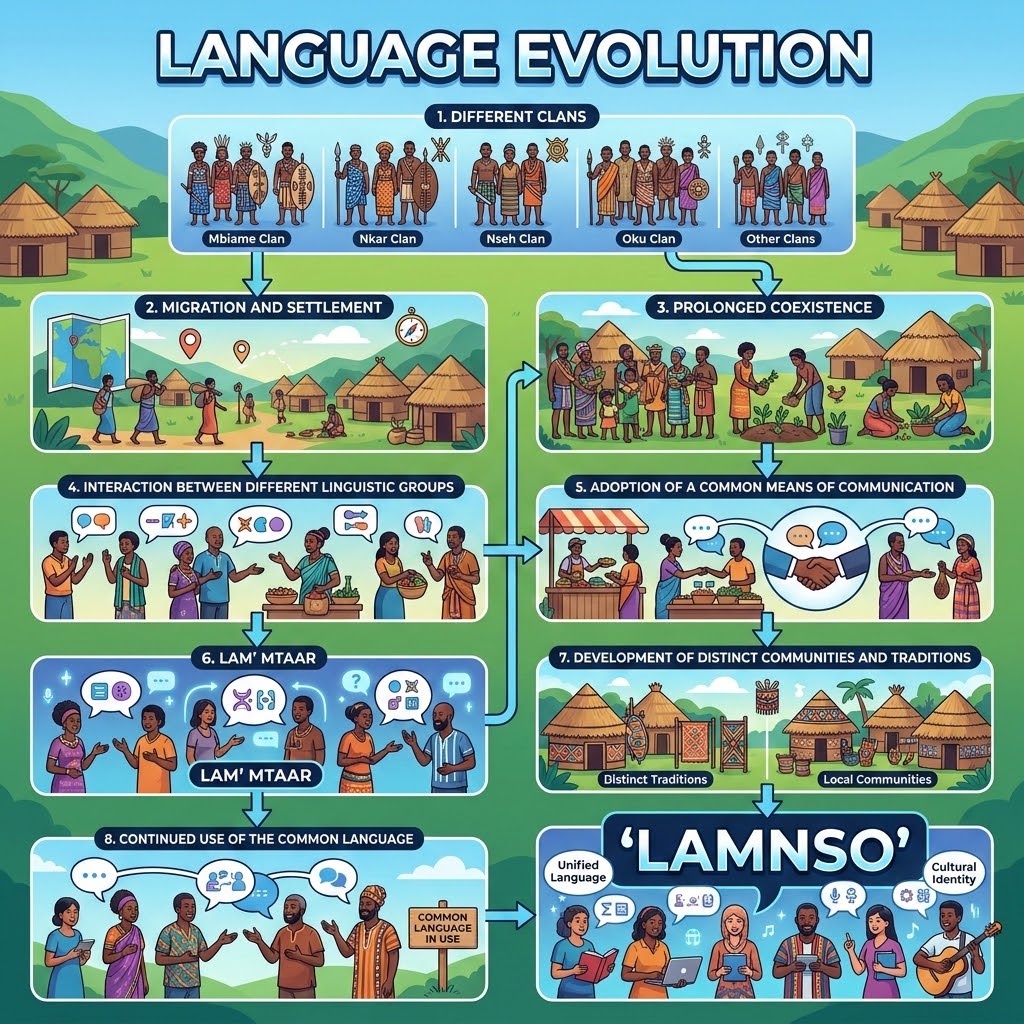
This interpretation is important because it allows us to understand the shared language without assuming that the communities that speak it became culturally or historically identical.
The Role of Ngon’nso and the Nso Name
The question of how Lam’ Mtaar came to be known as Lamnso’ introduces another dimension of the story: naming.
According to the genealogy of the Nso Fondom cited in the source material, Ngon’nso was the leader of the Nso family. She later became associated with the foundation of the Nso Fondom in 1394 together with her son, Le', who is identified as its first ruler.
The Nso group is also described as having had a considerably larger following than Mbiame.
Since the common language was already being used among several communities, the demographic and political prominence of Nso could have contributed to the language becoming increasingly associated with the name Nso.
This provides one possible explanation for the development from Lam’ Mtaar to Lamnso’.
However, this should not be interpreted to mean that Nso necessarily created the language, nor does the name alone establish that the language originated exclusively within Nso.
Rather, the name may reflect the later prominence of one community within a much wider linguistic history.
This distinction is essential.
The name attached to a language does not necessarily contain the entire history of that language.
Renaming Lam’ Mtaar With the Nso Tag
The question of naming is not unique to language.
Throughout history, communities have attached their names to objects, places, practices and institutions with which they have developed strong associations.
Berinyuy (2024:93) observes that:
“naming is an essential aspect of human life” and examines the significance of naming within the sociolinguistic environment of Cameroon.
In his 2026 publication, Berinyuy further documents what he describes as patterns of personalization or appropriation through naming within Nso and other communities in Bui.
Among the examples discussed are:
- Mbam se Nso — “Nso money,” referring to cowries
- Lang Nso — “Nso pot,” referring to clay pots
These examples raise an important historical question:
Does the name of an object necessarily establish its exclusive historical ownership?
The answer cannot be determined from the name alone.
A name can indicate how an object was understood, used or identified within a particular community but determining its deeper history requires looking at where the object or practice originated, who used it, how it spread and how different communities adapted it.
The same principle can be applied to Lamnso’.
Given that Lam’ Mtaar was indeed a common means of communication among several communities, the later dominance of the name Lamnso’ does not necessarily mean that the entire linguistic history belongs exclusively to Nso.
The Clay-Pot Example
The example of the clay pot demonstrates why cultural naming should be examined carefully.
Forni (2007) documents pottery as an important female-led artisanal practice deeply embedded in the cultural life of Babessi and Bamessing in Ngoketunjia Division of the North West Region of Cameroon. Pottery is not simply a household activity because locally produced clay pots have practical, economic and social significance and form part of the wider cultural life of the Grassfields. Forni goes on to observe that in Babessi for instance, pottery has defined regional cultural identity since the eighteenth century. Pots serve as social agents, mediating power dynamics between genders in Babessi culture. The production process parallels human reproduction, reinforcing women's roles in that community.
Consequently, when a clay pot is referred to as Lang Nso, the name itself cannot establish that pottery as a craft originated exclusively within Nso.
To investigate the history of pottery, other questions must be considered:
- Where did the practice originate?
- Who produced the pots?
- Which communities used them?
- How did pottery technology spread?
- How did different communities adapt the practice?
- What cultural meanings did pottery acquire in different societies?
The name alone cannot answer these questions.
The same caution is useful when considering the name of a shared language.
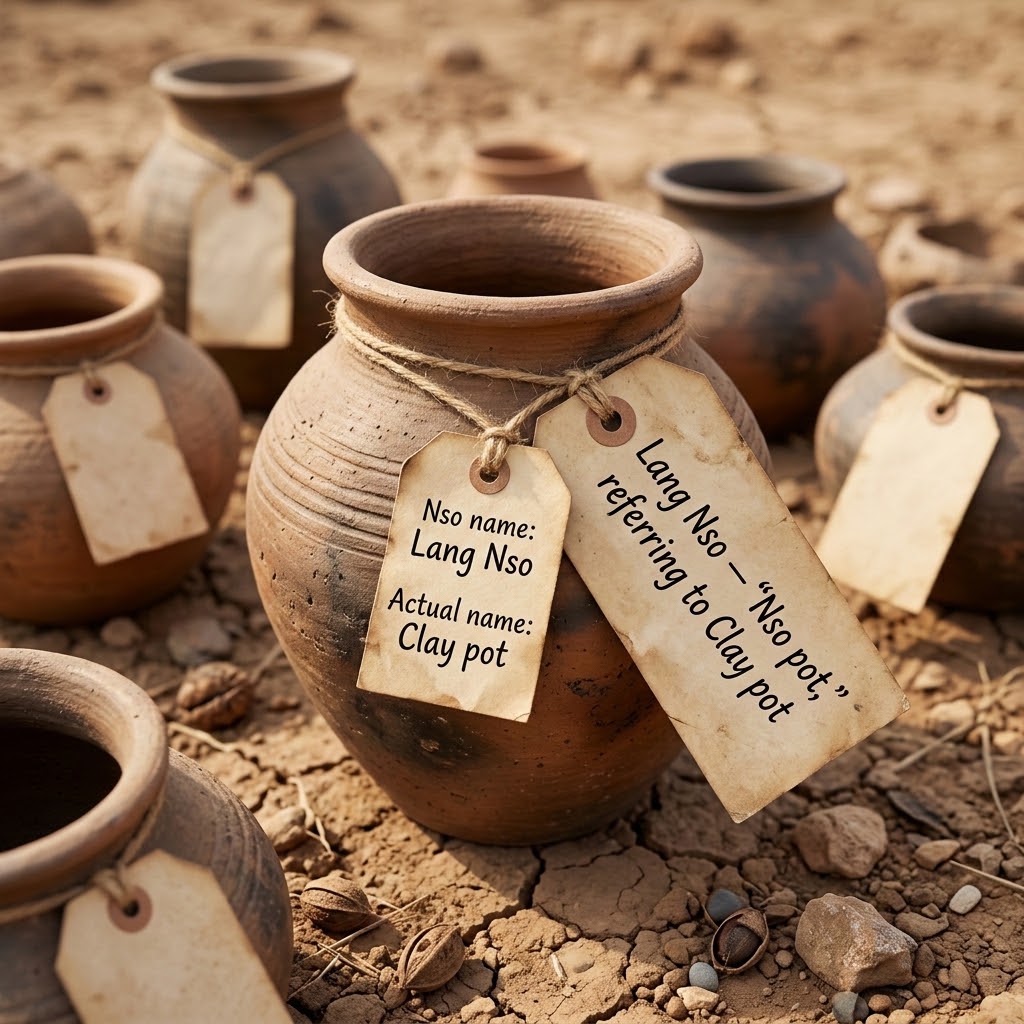
Lang Nso - "Nso Pot" referring to Clay Pot
The Cowry Question
Cowries provide another example.
Cowries are not commercially produced in Cameroon, as the mollusks that create them are marine sea snails native to the Indian and Pacific Oceans. Moffor (2022:65) observes that cowries have a long history in the Cameroon Grassfields and that their significance has developed through both historical use and later cultural adaptation. The emblematic object that was once used as legal tender is a very invaluable element of cultural identity and social stratification in many traditional settings across the Grassfields and beyond.
Summarily, in the past, cowries became associated with:
- Wealth
- Exchange
- Social status
- Political authority
- Cultural identity
- Social stratification
Their importance therefore extended across numerous traditional settings.
Within Lamnso’, cowries are referred to as Mbam se Nso, or “Nso money.”
The expression tells us something about how cowries were named and conceptualized within the Nso linguistic context.
However, the expression itself cannot establish that cowries historically belonged exclusively to Nso.
This brings us back to an important distinction:
What something is called is not necessarily the same as the complete history of that thing.
The same principle applies to the language now known as Lamnso’.
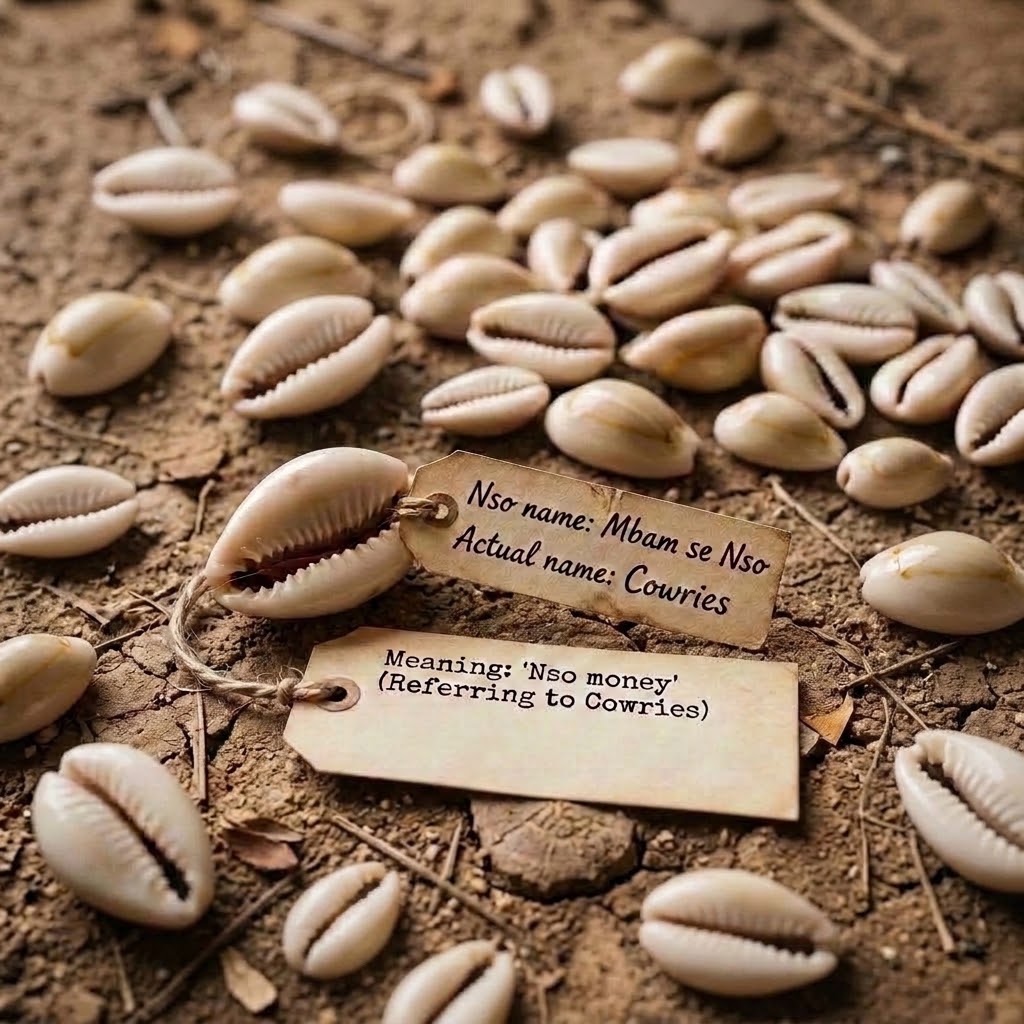
Mbam se Nso — “Nso money,” referring to cowries
In conclusion, the expression "Mbam se Nso" (Nso Money) attributed to cowries has no connection to Nso origin or ownership, as is the case with Lamnso. It is what Berinyuy (2026) refers to as an act of misappropriation of what has no specific cultural heritage to Nso tribe.
Why the Same Language Does Not Make Two Fondoms the Same People
This is one of the most important points in understanding the relationship between Mbiame, Nso and other communities that speak Lamnso’.
Two or more Fondoms can speak essentially the same language while remaining different Fondoms, different clans and communities with distinct traditions and histories.
This is not unusual.
Human history contains many examples of communities that share a language while maintaining different:
- Histories
- Origin traditions
- Territories
- Traditional authorities
- Institutions
- Customs
- Festivals
- Social structures
- Cultural practices
- Communal identities
The mistake is to assume:
Same language = same people.
That equation is historically too simple.
To understand the relationship properly, several different dimensions of identity must be distinguished.
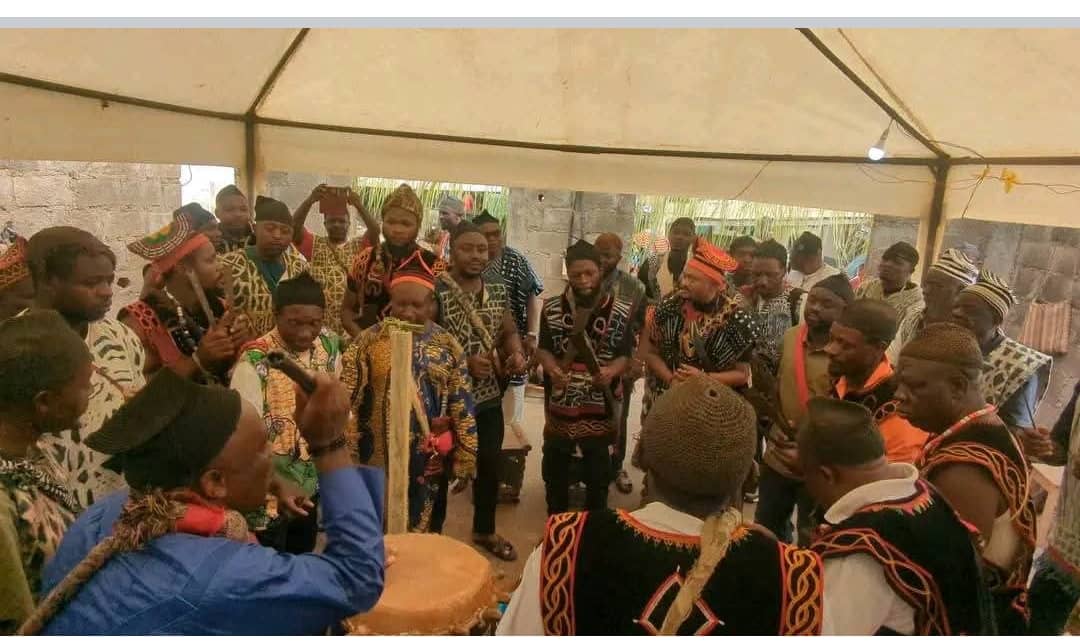
MBIAME AND NKAR, DIFFERENT CLANS, ONE LANGUAGE
1. Language: How Do People Communicate?
Language answers the basic question:
How do people communicate?
Two communities may speak mutually intelligible varieties of the same language.
This demonstrates linguistic connection.
It does not, by itself, establish that they have the same political institutions, traditions or communal identity.
2. Speech Community: Who Shares Linguistic Norms?
A speech community consists of people who share linguistic practices such as:
- Vocabulary
- Pronunciation
- Expressions
- Grammar
- Intonation
- Ways of communicating
A speech community can extend across the boundaries of different communities.
This means that a language can become larger than any one Fondom.
3. Fondom and Political Identity: How Is a Community Organized?
A Fondom is not simply a linguistic unit.
It is a historical institution with its own systems of authority, succession, territory, institutions and collective memory.
Two Fondoms may therefore speak the same language while maintaining separate traditional authorities and political histories.
The shared language does not erase those differences.
4. Cultural Identity: What Traditions Does a Community Preserve?
This distinction is particularly important for Mbiame.
Communities that share a language can nevertheless preserve different traditions and cultural practices.
Cultural identity can include:
- Origin traditions
- Clan histories
- Succession systems
- Royal institutions
- Traditional titles
- Dances
- Initiation practices
- Marriage customs
- Festivals
- Taboos
- Food traditions
- Architecture
- Names
- Historical figures
- Migration narratives
- Relationships with neighboring communities
Therefore, speaking Lamnso’ does not mean that Mbiame and Nso have identical traditions.
Their linguistic relationship is only one part of a much larger historical relationship.
5. Communal Identity: Who Do People Understand Themselves to Be?
There is an even deeper question:
Who do these people understand themselves to be?
Communal identity develops through historical memory, ancestry, traditions, institutions, territory, family relationships and cultural practices.
Language can tell us that communities have been connected.
It does not necessarily tell us how they became connected.
Nor does it determine how each community understands its own history.
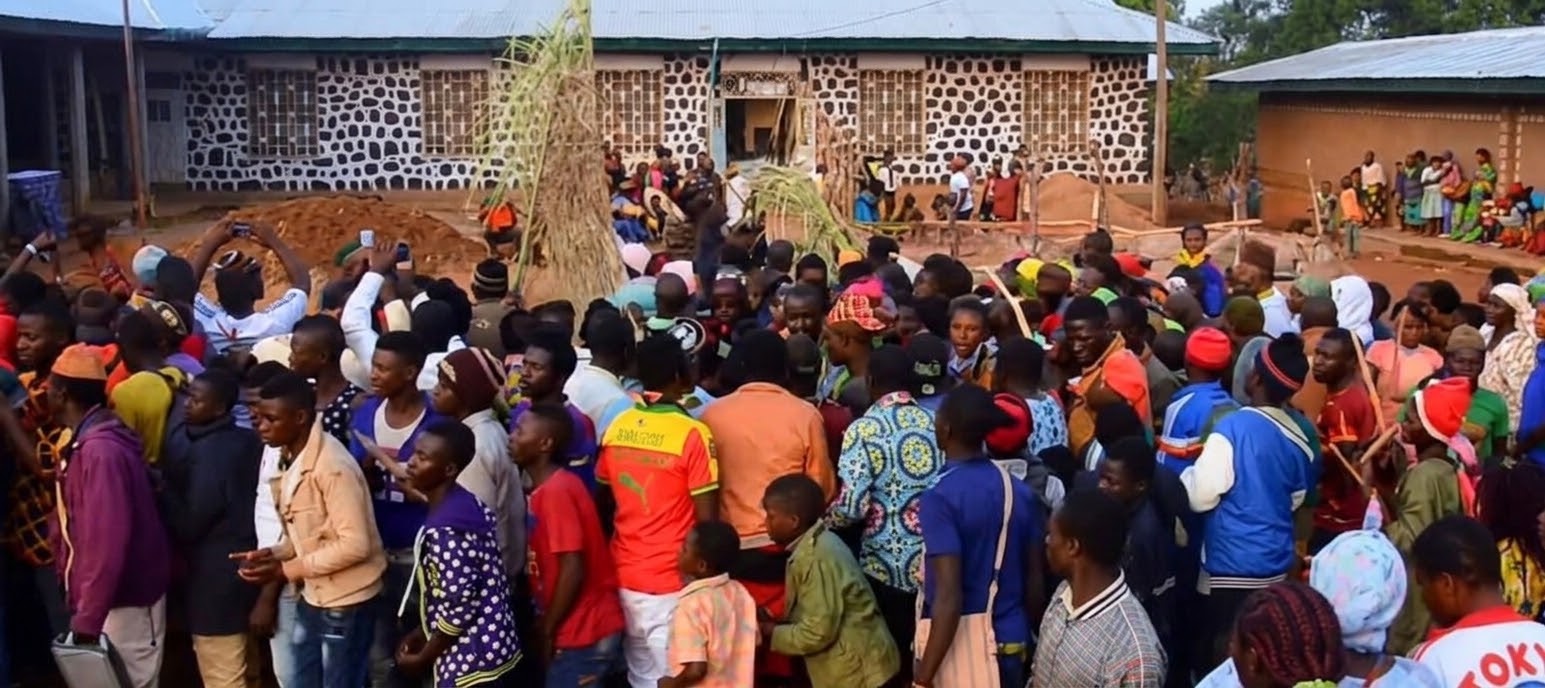
DIFFERENT PEOPLE, ONE LANGUAGE
Different Fondoms Can Share One Language
It is therefore important to distinguish between linguistic unity and cultural or communal uniformity.
Mbiame and Nso may share Lamnso’ as a common language, but that does not mean that Mbiame is Nso, that Nso is Mbiame, or that one is simply an extension of the other.
The same principle applies to other communities that speak the language.
A common language can be inherited from a period of close interaction and then carried forward by communities that develop their own institutions, traditions and identities.
This is why language should be treated as one historical layer among several, rather than as a complete definition of a people.
Africa Provides Many Examples
The relationship between language and identity becomes even clearer when viewed beyond Bui.
Africa contains numerous linguistic landscapes in which languages extend across the boundaries of different communities and political territories.
Fulɓe and Fulfulde
Fulɓe communities have historically lived across a vast portion of West and Central Africa.
Fulfulde is consequently spoken across numerous territories and among communities with different political histories.
The shared language demonstrates historical and social connections.
It does not erase local identities.
Arabic
Arabic provides an even broader example.
Arabic is spoken across countries including:
- Morocco
- Algeria
- Egypt
- Sudan
- Saudi Arabia
- Iraq
- Syria
Yet Arabic-speaking populations do not all have identical histories, cultures, political institutions or communal identities.
The language connects them linguistically without making their histories identical.
Again, the lesson is straightforward:
A common language does not require a single political, cultural or communal identity.
The Opposite Is Also True
If speaking the same language does not necessarily make communities the same people, then speaking different languages does not automatically mean that communities are historically unrelated.
Languages can diverge over time.
Communities can retain memories of common ancestry even after their languages change.
Different populations can also adopt a common language through prolonged interaction.
Political communities can contain multiple languages.
Therefore:
Linguistic similarity can indicate historical connection without proving identical identity.
And equally:
Linguistic difference can indicate linguistic divergence without proving complete historical separation.
Language is therefore only one piece of the larger historical puzzle.
What Does Lamnso’ Tell Us?
The fact that Mbiame, Nso, Nkar, Nseh and other communities speak Lamnso’ should invite deeper historical questions.
Rather than asking only:
“Who owns the language?”
we should also ask:
“What historical processes brought these communities into linguistic contact?”
Those processes may include:
- Shared ancestry
- Migration
- Prolonged coexistence
- Intermarriage
- Trade
- Political alliances
- Population movements
- Linguistic borrowing
- Interaction between different speech communities
- Adoption of a common means of communication
The language can therefore be understood as a living historical record.
It preserves traces of relationships that developed over generations.
Lamnso’ as a Linguistic Bridge
Viewed from this perspective, Lamnso’ represents an important linguistic connection among communities whose histories have interacted over time.
One possible reconstruction is:
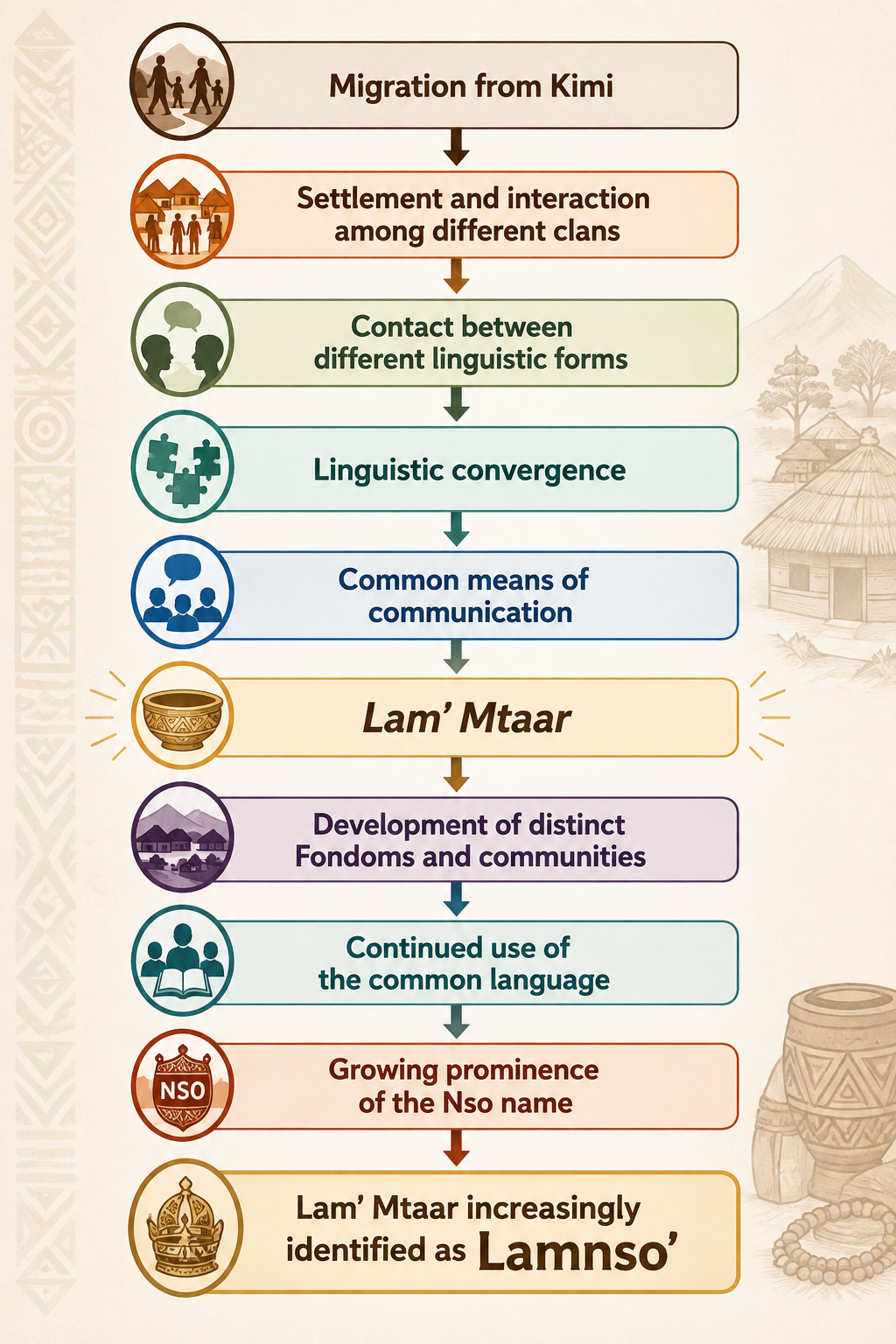
This sequence provides a possible explanation for the linguistic situation, while recognizing that some parts of the historical process require further research.
The Larger Historical Lesson
The history of Mbiame and Nso demonstrates that several aspects of identity can overlap without becoming the same thing.
- Language is not the same as clan.
- Language is not the same as Fondom.
- Language is not the same as culture.
- Language is not the same as political identity.
- Language is not the complete history of a people.
A shared language may reveal centuries of interaction, migration and communication.
At the same time, different communities can preserve their own traditions, institutions, historical memories and identities.
This is particularly important when documenting the history of communities such as Mbiame.
The fact that Mbiame speaks Lamnso’ should be understood as part of Mbiame's historical experience, not as a reason to reduce Mbiame's history to the history of another Fondom.
Conclusion
The common mother tongue spoken by Mbiame, Nso, Nkar, Nseh and other communities is an important part of the history of Bui.
Its development may be connected to migration from Kimi, prolonged coexistence, interaction among different clans and the gradual evolution of a common means of communication. According to the historical interpretation discussed above, the language now known as Lamnso’ may once have been known as Lam’ Mtaar before the Nso name became attached to it.
The name Lamnso’, however, should not by itself be treated as proof that the language is the exclusive property of Nso.
Nor should speaking Lamnso’ be used to suggest that communities such as Mbiame and Nso are the same Fondom, the same clan, or communities with identical traditions and histories.
They can share a language while maintaining distinct historical identities.
This is not a contradiction.
It is a normal feature of how languages and societies develop.
The more useful historical question is therefore not simply who speaks the language, but how that language came to be shared, how it evolved, how it acquired its present name, and what its history tells us about the communities that carried it across generations.
For Mbiame, this distinction is especially important.
Mbiame's use of Lamnso’ is part of Mbiame's own history. It does not erase Mbiame's distinct clan history, traditions, institutions or cultural identity.
A common language can connect different communities without making them one community.
And a language bearing the name of one community can have a history that reaches beyond that name.
Lamnso’ may have one name today, but its history may carry the voices of many communities.
References
- Banbooyee, W. (2001). Introduction to Nso’ History. Kimbo’.
- Berinyuy, Jude. (2024). “Taming the Madness in Naming: A Sociolinguistic Profile of Cameroon.” Cameroon Journal of Studies in the Commonwealth (CJSC), 7(2), 92–102.
- Berinyuy, Jude. (2025). Mbiame in the Beginning, Yesteryears and Nowadays. Yaoundé: Nyaa Publishers.
- Berinyuy, Jude. (2026). “Preservation of Cultural Heritage or Misappropriation? A Sociolinguistic Probing of Naming among Some Tikar Tribes.” Frontiers International Journal of Interdisciplinary Studies (FIJIS), 1(2), July 2026, 26–43.
- Blench, Roger. (2011). The Membership and Internal Structure of Bantoid and the Border with Bantu. Berlin: Humboldt University Press.
- Forni, S. (2007). “Containers of Life: Pottery and Social Relations in the Grassfields Cameroon.” African Arts, 40(1), 42–53.
- Moffor, T. (2022). “The Semantic Transformation of the Cultural Significance of the Cowry in the Cameroon Grassfields.” East African Scholars Publisher, 5(5), 63–78.
- Pinker, S., & Bloom, P. (1990). “Natural Language and Natural Selection.” Behavioral and Brain Sciences, 13(4), 707–727.
Author: JUDE T. BERINYUY
Co-author: AYUVEA ANGELO T.
Editor(s): AYUVEA ANGELO T. / JUDE T. BERINYUY