

Within the sovereign governance of the Mbiame Fondom, the traditional architecture is anchored by deep spiritual checks and balances. At the absolute apex of this system sits an institution of unyielding authority: Nwerong Mbiame. Operating simultaneously as the supreme administrative body and an elite secret society lodge, Nwerong dictates the spiritual, legal, and structural heartbeat of the entire kingdom.
Defining Nwerong: The Institution vs. The Lodge
To understand the socio-political dynamics of Mbiame, one must recognize the dual nature of Nwerong:
1. The Membership and the Throne
Nwerong Mbiame is primarily composed of the "Wonle Ntoh"—citizens who are generally not of Mbiame royal blood. Individuals enter this sacred institution either through freewill integration or via traditional arrest and mandatory initiation into the lodge.
The institutional separation of powers is absolute: the enthronement of a new Fon is the exclusive, sovereign right of Nwerong Mbiame, yet no member of the Nwerong sanctum can ever ascend the throne to become Fon. The Paramount Fon of Mbiame occupies a completely unique position, standing as the only individual in the land who holds simultaneous membership in both the Nwerong and the royal Ngiri sanctums.
2. The Supreme Institution ("Tàà Nsai")
As an institution, Nwerong Mbiame is the highest regulatory body in the kingdom and is answerable to no earthly power. Commonly revered as "Tàà Nsai" (Father of the Land), the institution is uniquely vested by the gods with unequivocal and unconditional powers to execute sacrifices and vital traditional rites. Nwerong shares this cosmic responsibility exclusively with its symbolic son—the Paramount Fon.
3. The Secret Lodge of Ancestral Spirits
As a male-only secret lodge, Nwerong Mbiame serves as the spiritual home to a powerful hierarchy of ancestral masqueraders, including:
Kingayassi
Kibaranko
Shigwaala
Ndevri
Mikang me Ngven
Mbiriwa
Apart from Kibaranko and Shigwaala, these sacred masqueraders manifest publicly under strict conditions: primarily during the annual Kpu Ye Wiyi (Mbiame Cultural Festival) or when Nwerong Mbiame undertakes official state visits to another palace to mourn a deceased Fon.
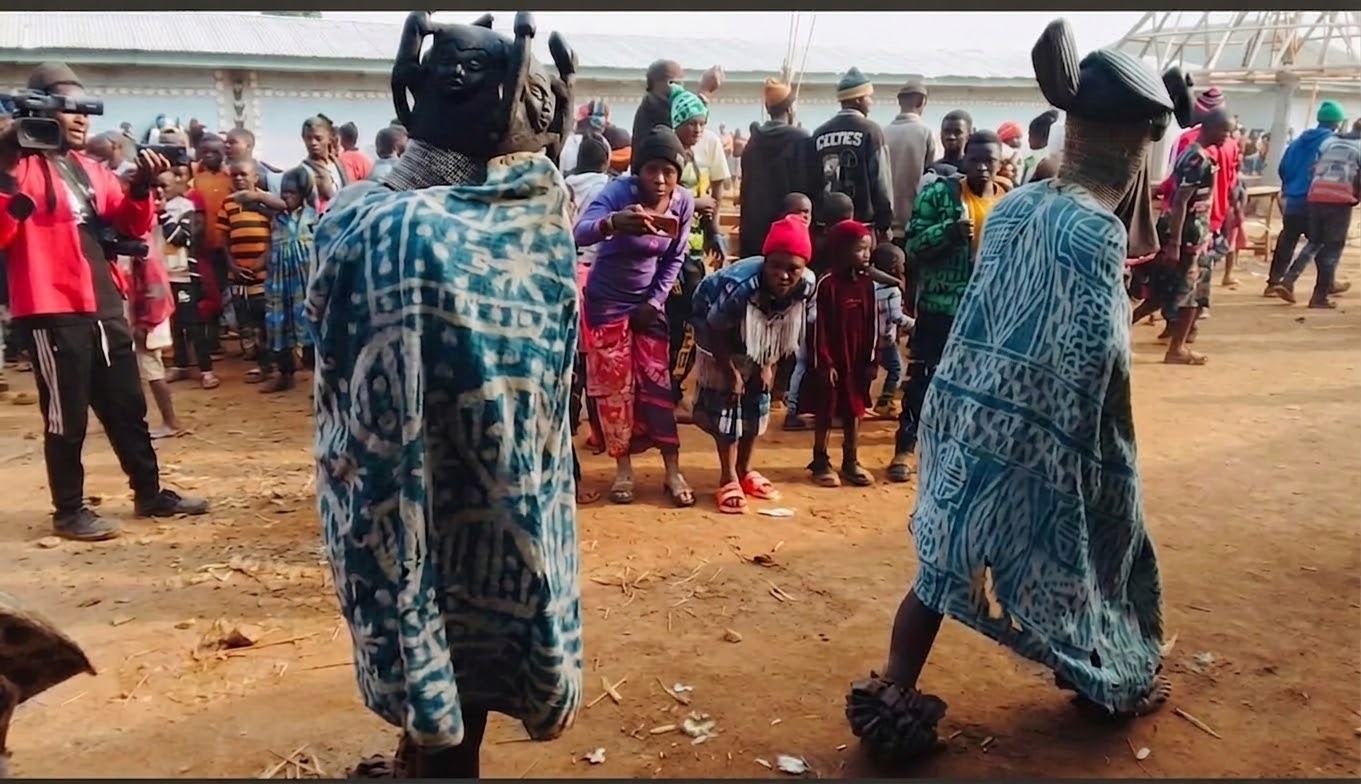
Fig 1 : Mbiriwa Mbiame
Core Functions: The Supreme Court of Mbiame Land
Operating as the highest traditional court, the decisions of Nwerong Mbiame are absolute, supreme, and bound by strict execution deadlines. Its structural mandates include:
Royal Transitions: It is the only traditional institution permitted to publicly announce the disappearance (death) of the Fon of Mbiame or any other sub-Fon within Nsai Mbiame, as well as declaring the official mourning period.
Festival Directives: It officially decrees the start of the Kpu Ye Wiyi festival, outlines its exact procedural unfolding, and commands when it must end.
Geopolitical Regulation: It governs the physical movements of the monarch, deciding exactly when the Fon of Mbiame may cross the borders of the land and the duration of his stay abroad. Nwerong retains the veto power to tell the Fon "NO"—a restriction delivered directly in private palace councils rather than public declarations.
Land Injunctions: It holds the power to place a "Kirang" (traditional injunction tag) on any disputed or conflicted piece of land within the Fondom, removing it only when justice has been satisfied.
Judicial Sanctions: It possesses the supreme authority to sanction and fine the Paramount Fon or any other regional leader who violates the customary laws of the land.
The Historic Sanction of June 2023:
Demonstrating its absolute systemic supremacy, Nwerong Mbiame formally sanctioned the reigning paramount ruler, Fon Nweh II, in June 2023. The reasons for the trial were kept strictly confidential within the palace walls, but the public fine levied against the throne was massive and meticulous: 50 goats, 50 fowls, 50 jugs of raffia palm wine, 50 crates of beer, and 50 traditional baskets of corn fufu.
The Art of Coded Communication
Nwerong Mbiame does not engage in public debates or arguments with the populace. Instead, it communicates its decisions using a highly sophisticated, coded language:
Parables and Prophecy: Every public pronouncement from the sanctum is delivered in rich, allegorical parables that double as warnings, predictions, sanctions, or final legal conclusions.
The Speculation Window: Following a public outing by Nwerong, the population is intentionally left to speculate and digest the depth of the parables, eventually uncovering the exact intended message.
The Messengers: The supreme word is delivered to the public or the market square by specific titleholders among the thirty-five (35) ordained Nchelav Nwerong Mbiame or the Taanto. This task is never given lightly; it requires immense wisdom, experience, and institutional longevity.
The Gift of Discernment: To prevent monotony and ensure maximum impact, speakers vary continually, with specific Nchelav chosen for particular proclamations because they are uniquely gifted with spiritual discernment.
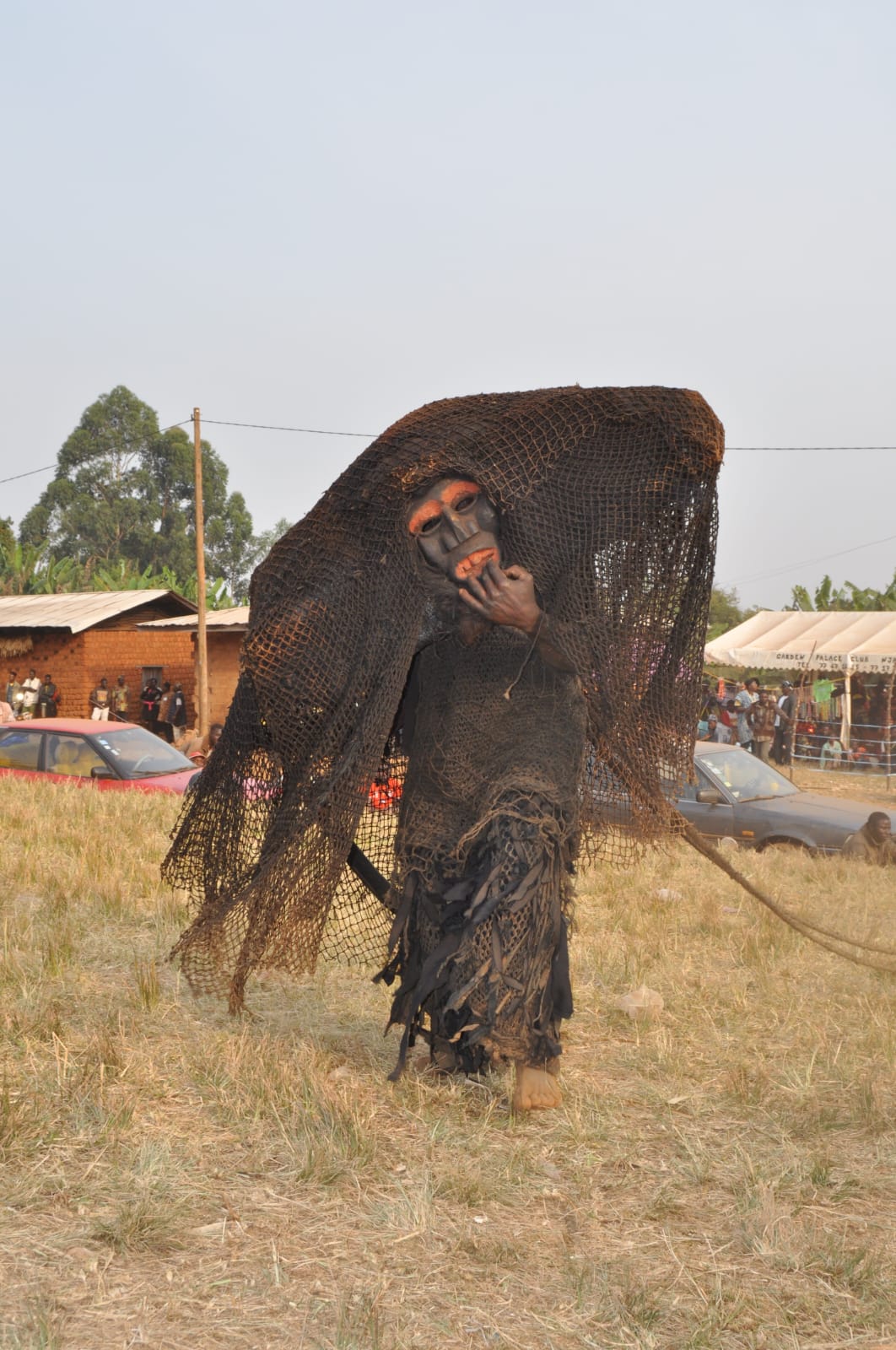
Fig 2: KIBARANKO KE MBIAME
Conclusion: A Single Mindset
The relationship between Nwerong Mbiame and the Fon is entirely unambiguous and free of systemic conflict. Despite the ultimate supremacy of Tàà Nsai, it works hand-in-glove with the throne, with each power acutely aware of its exact jurisdictional boundaries.
When Nwerong Mbiame makes an official outing, the palace and the entire population are expected to adjust into one unified voice and mindset, whether the decree is universally pleasing or not. Within the borders of Mbiame, any public questioning, insinuation, or defiance of Nwerong's word is considered deeply sacrilegious and traditionally incriminating.
Sources & Academic References
Mbiame Palace Archives. Internal Records of Judicial Fines and Customs.
Mformi Kimi (1960s). Manuscripts and Oral Tradition Chronicles on Tàà Nsai.
Berinyuy, J. T. (2018). The Return. Yaoundé.
Berinyuy, J. T. (2022). Clash of Egos: Traditional Checks and Balances. Yaoundé.
AUTHOR(s): BERINYUY T. JUDE
EDITOR(s): AYUVEA ANGELO T.