
Introduction
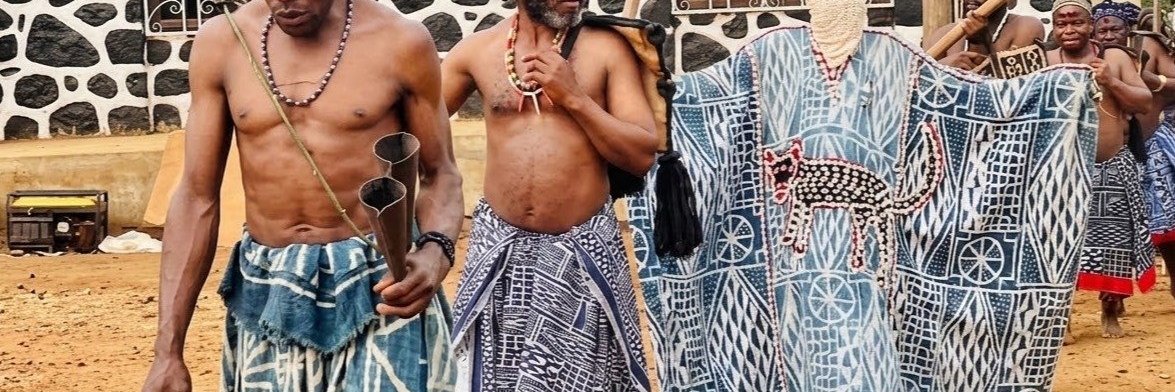
The Mbiame Fondom possesses a rich and highly organized traditional institution built around several important palace cults and traditional orders.
Among these are:
- Nwerong Mbiame — regarded as the custodian and owner of the land, the father of the Fon, and the grandfather of Ngiri.
- Ngir Mbiame — regarded as the son of the Fon and the grandson of Nwerong, with its own distinct responsibilities within the palace institution.
- Manjong — the military wing responsible for the defence and protection of the Fondom.
Manjong itself is divided into two independent branches: Mfuhs Ntem and Ntse. Each branch operates under its own leadership and procedures. However, both come together during Mfuh Wailun, a common assembly where their leaders deliberate and establish guidelines for the administration of their respective branches.
This article focuses on two prestigious institutions within the traditional hierarchy of Mbiame: Yee Nwerong and Yee Ngiri.
Although both institutions share important similarities, they can be distinguished by their unique masks, staffs, ornaments, caps, attire, and other ceremonial features.
Yee Nwerong and Yee Ngiri
Within the Nwerong sanctum of the Mbiame Fondom are several sub-cults, each entrusted with specific traditional responsibilities during festivals, royal ceremonies, funerals, and other important cultural events.
Ngiri also has its own structured institutions and traditional orders.
Among these, Yee Nwerong and Yee Ngiri represent elite classes within their respective institutions.
Their regalia are not merely decorative.
The distinctive features associated with each institution communicate its identity, history, and place within the traditional structure of Mbiame.
.jpg)
Fig 1: YEE NWERONG MBIAME
How Membership May Be Acquired
Membership in either Yee Nwerong or Yee Ngiri may traditionally be acquired through three recognized pathways.
1. Inheritance
A son may succeed his deceased father and continue the family's traditional lineage and responsibilities.
Through inheritance, knowledge and obligations are passed from one generation to the next.
2. Initiation
An individual who possesses the financial means, genuine commitment, and willingness to serve may seek admission through the appropriate traditional authorities.
Initiation allows an individual to become part of the institution through established traditional procedures.
3. Invitation
An institution may also identify a respected and accomplished individual whose character, achievements, and standing make him worthy of membership.
Such a person may be invited to join even without a prior family affiliation with the institution.
How to Identify Yee Nwerong
A member or masquerader of Yee Nwerong can be identified by several distinctive features.
The Mbang Nwerong
The Mbang, or staff, is made from bamboo and bears three black bands near its upper section.
The Kibar
Yee Nwerong carries a Kibar, identified in the tradition as a wall gecko or agama lizard, decorated with cowries on both the front and back.
The Mask
The wooden mask is carved with a human face.
The Hands
The hands remain concealed, creating the appearance of sleeveless arms.
The Cap
Members decorate their caps with Mbor (fresh green leaf) hanging down the forehead.
Their caps are also characterized by straight-line patterns.
Quick Identification: Yee Nwerong
- Mask: Human face
- Staff: Bamboo with three black bands
- Ornament: Cowrie-decorated Kibar
- Hands: Concealed
- Cap: Straight-line patterns
- Forehead decoration: Mbor (green leaf)
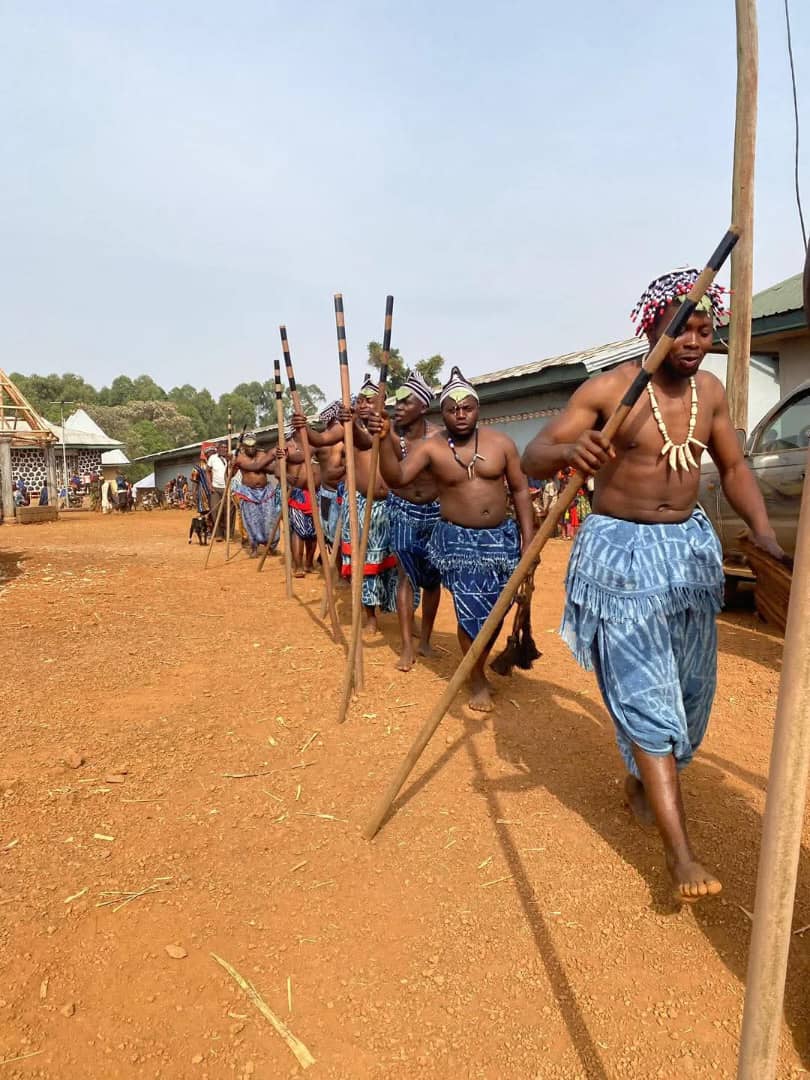
Fig 2: NGANG SE YEE NWERONG MBIAME
How to Identify Yee Ngiri
Although Yee Ngiri shares certain similarities with Yee Nwerong, its traditional appearance contains several important differences.
The Hands
Unlike Yee Nwerong, the hands of Yee Ngiri are clearly visible.
The Mbang Ngiri
The Mbang Ngiri is a bamboo staff with bamboo spikes inserted into its upper section.
The Mask
The wooden mask is carved with an animal face, distinguishing it from the human-faced mask associated with Yee Nwerong.
The Baa Motif
Yee Ngiri carries a beautifully decorated Baa, or leopard motif, ornamented on both the front and back.
The Cap
Members wear richly decorated caps that do not feature the straight-line patterns associated with Yee Nwerong.
The Forehead Decoration
Unlike Yee Nwerong, members of Yee Ngiri do not wear Mbor, on their foreheads caps.
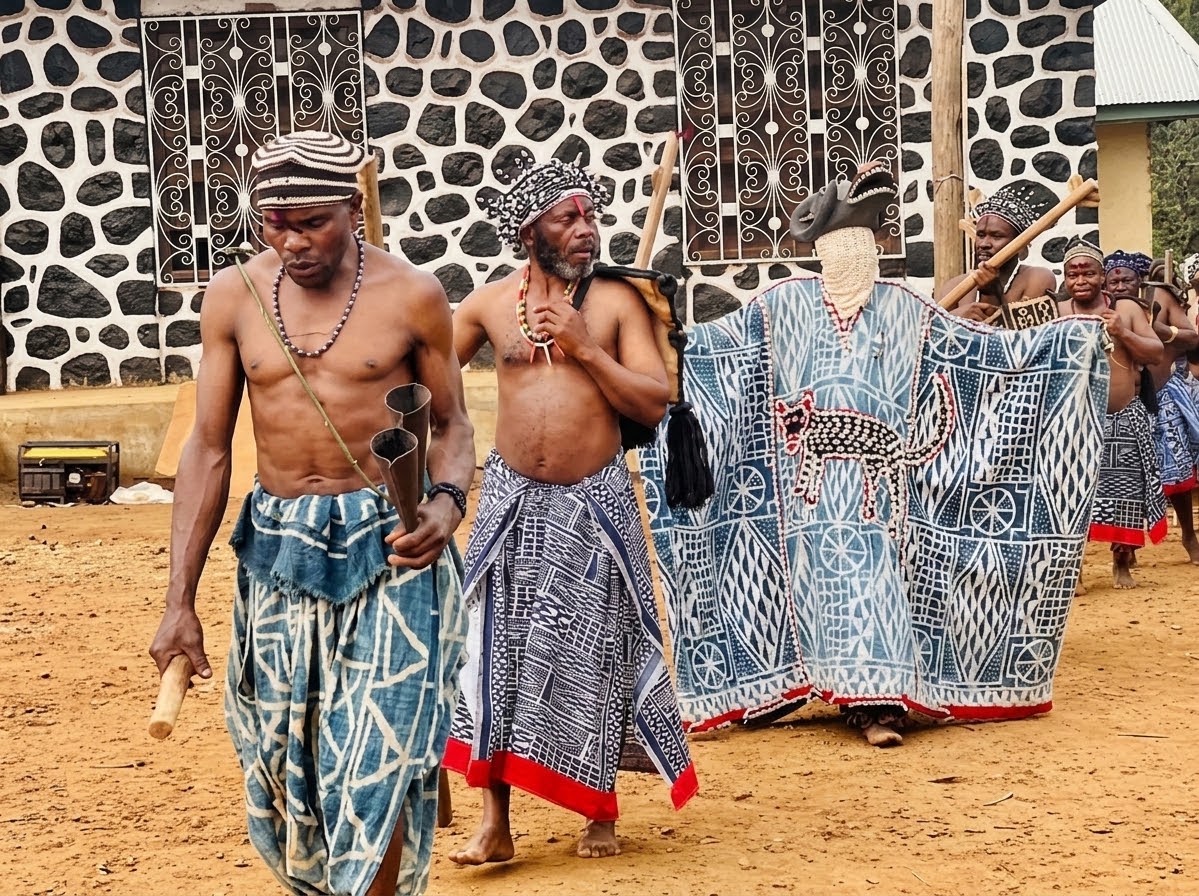
Fig 3: YEE NGIRI MBIAME
Quick Identification: Yee Ngiri
- Mask: Animal face
- Staff: Bamboo spikes inserted into the upper section
- Ornament: Decorated Baa (leopard motif)
- Hands: Visible
- Cap: Richly decorated without straight-line patterns
- Forehead decoration: No Mbor but a red feather hanging from the cap down the forehead
%20YEE%20NGIRI%20MBIAME%20.jpg)
Fig 4: NGHEM (INSTRUMENT) YEE NGIRI MBIAME
The Importance of the Staff and Headgear
The staff and headgear provide some of the clearest visual distinctions between the two institutions.
For Yee Nwerong, the three black bands on the Mbang, the Mbor leaves, and the straight-line cap patterns are important identifying features.
For Yee Ngiri, the bamboo spikes on the Mbang and the presence of feathers on the staff and caps are distinctive features.
These elements make it possible for people familiar with Mbiame traditional institutions to identify the two groups during processions, ceremonies, and public cultural appearances.
Traditional Attire
Both Yee Nwerong and Yee Ngiri have two principal categories of traditional attire.
Mourning Attire
During funeral rites and mourning ceremonies, members may wear:
- their personal loincloths; or
- very old royal traditional clothes known as Ndzenjav.
The use of these garments reflects humility, continuity, and reverence for the ancestors.
The old royal clothes also carry the symbolism of continuity between past generations and the present.
Ceremonial Attire
During royal festivals, palace celebrations, and other important cultural occasions, members appear in carefully prepared ceremonial garments.
These clothes are:
- clean;
- richly decorated;
- carefully crafted; and
- appropriate to the dignity of the institution.
The ceremonial attire reflects the prestige and traditional importance of both Yee Nwerong and Yee Ngiri.
.jpg)
Fig 4: NGANG SE YEE NGIRI MBIAME
Additional Ceremonial Distinctions
Beyond their general regalia, the two institutions also have additional features associated with their ceremonial appearances.
- Yee Nwerong has a Tav Nwerong during its formation in procession.
- Yee Ngiri is distinguished by the presence of a feather on top of the Mbang and in the caps.
These details further contribute to the visual identity of each institution during traditional ceremonies and processions.
Yee Nwerong vs Yee Ngiri: Key Differences
| Feature | Yee Nwerong | Yee Ngiri |
| Mask | Human face | Animal face |
| Hands | Concealed | Visible |
| Staff | Three black bands | Bamboo spikes |
| Main ornament | Kibar | Baa / leopard motif |
| Cap pattern | Straight-line patterns | No straight-line patterns |
| Fresh leaves | Mbor on forehead | No Mbor but red feather |
| Additional head/staff feature | Tav Nwerong in procession | Feather on Mbang and caps |
Why These Distinctions Matter
The differences between Yee Nwerong and Yee Ngiri are more than matters of costume or appearance.
Each symbol forms part of a broader system of traditional identity.
The masks, staffs, ornaments, caps, leaves, feathers, and ceremonial attire reflect:
- institutional identity;
- traditional responsibilities;
- historical continuity;
- membership;
- rank and prestige; and
- the distinct place of each institution within Mbiame traditional governance.
For this reason, documenting these differences is important.
As cultural practices evolve and younger generations become increasingly exposed to modern life, accurate documentation helps preserve the knowledge necessary to understand and recognize Mbiame's traditional institutions.
Conclusion
Yee Nwerong and Yee Ngiri are two prestigious institutions within the traditional structure of the Mbiame Fondom.
Although they share similarities in their ceremonial importance and traditional status, each possesses distinctive regalia, symbols, and practices that make it recognizable to those familiar with Mbiame culture.
The human-faced mask, concealed hands, three black bands on the staff, Mbor leaves, and straight-line cap patterns help distinguish Yee Nwerong.
The animal-faced mask, visible hands, bamboo spikes on the staff, Baa motif, decorated caps, and feathers are among the features associated with Yee Ngiri.
These visible distinctions represent centuries of history, tradition, and institutional identity.
Preserving and documenting them is therefore not simply a matter of recording ceremonial clothing. It is part of safeguarding the cultural heritage of the Mbiame Fondom for future generations.
By Wongibe Leonard
Sources:
- Mbiame Palace Archives
- Oral Narratives from Faay Kuinto before his Death
- Nwerong Mbiame Sanctum Info
- Ngiri Mbiame Sanctum Info
Author: WONGIBE LEONARD
EDITOR(s): AYUVEA ANGELO T./ JUDE T. BERINYUY