
At a Glance
- Communities: Mbiame and Bamoun
- Shared ancestry: Both traditions connect their origins to the wider Tikar ancestral homeland
- Beginning of the historical relationship: Migration from Kimi around the late 14th century
- Major source of tension: Centuries of warfare, raids and memories of bloodshed
- Major historical events: The death of a Bamoun in Mbiame, the killing of Fon Yaah at Mbolah, and the capture of Fon Kailang
- Important places: River Mape, Tiywong, Romelay-Kovkinkar, Mbolah and the present Mbiame-Bamoun boundary
- Present relationship: Neighbourly coexistence, with Mbiame and Bamoun communities living on both sides of the border
- Traditional reconciliation: Mbiame oral tradition holds that a traditional process of cleansing and reconciliation would help heal memories of the past
Introduction
The historical relationship between Mbiame and Bamoun is one of the more complex relationships preserved in the history of the two communities. Although both are traditionally connected to the wider Tikar ancestral homeland, their relationship over the centuries has been marked by both kinship and conflict.
There are longstanding questions about why relations between Mbiame and Bamoun have sometimes carried an element of caution despite their shared ancestral traditions. Mbiame oral history points to a history shaped by bloodshed, warfare, displacement and unresolved memories, rather than by a simple disagreement between neighbouring communities.
Several episodes occupy an important place in this historical memory. Among them are the reported death of a Bamoun in the Mbiame palace, the killing of Fon Yaah at Mbolah, and the capture of Fon Kailang and his reported return to Mbiame.
Yet the story is not simply one of hostility. Today, Mbiame and Bamoun live as neighbouring communities, with people from both sides residing and interacting across the boundary.
Within Mbiame traditional understanding, however, the memories of past bloodshed remain important. There is therefore a belief that a traditional process of reconciliation and cleansing of the land could help heal the historical wounds and create a stronger basis for cultural and royal communion between the two communities.
If You Did Not Know
Mbiame oral tradition remembers the River Mape as an important point in the separation of some of the migrating groups from the Tikar homeland. The events surrounding the river are therefore not only geographical memories but part of the traditional explanation of how the different communities eventually followed separate paths.
The Beginning of the Saga
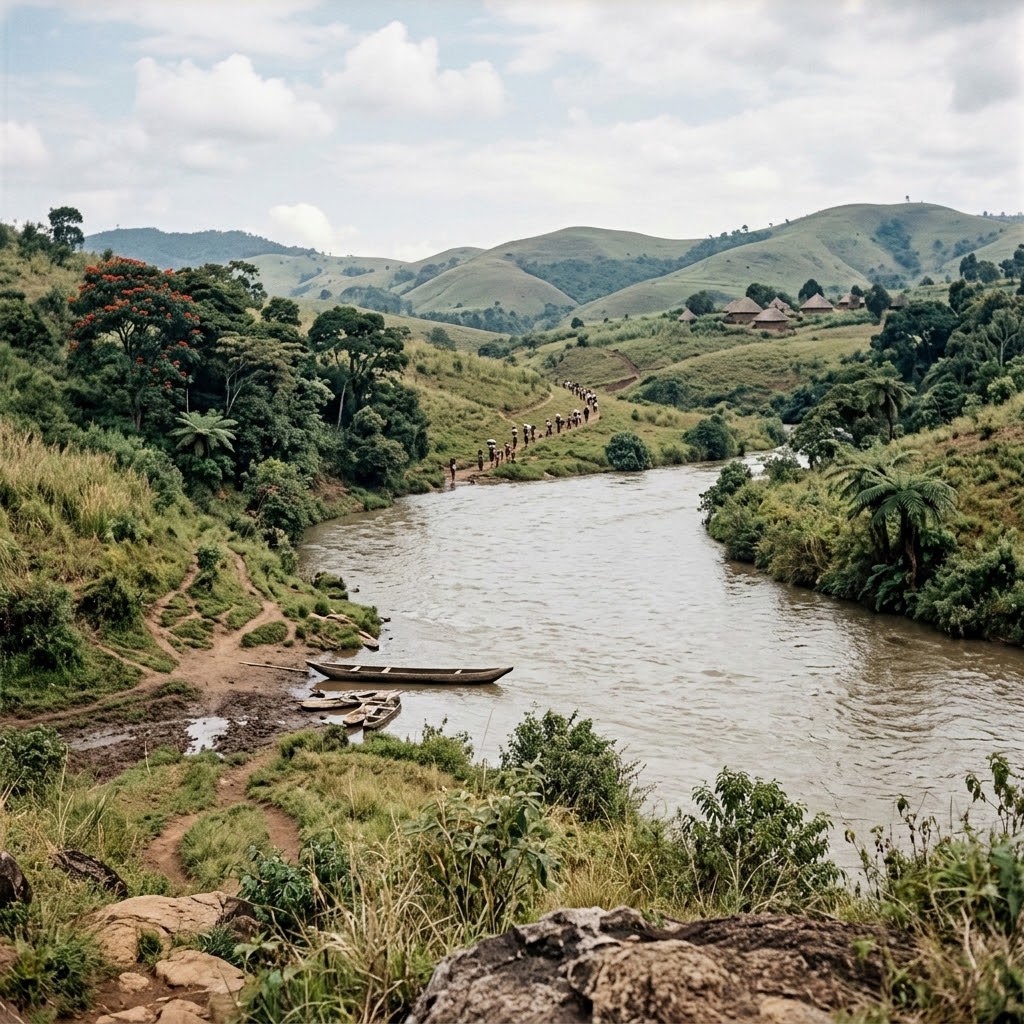
Fig 1: The River Mape occupies an important place in traditions surrounding the separation of the migrating groups from the Tikar homeland.
The Migration from Kimi
According to the historical traditions preserved in Mbiame sources, a major exodus from Kimi took place around 1387 following a succession dispute.
The migrating groups included the ancestors of communities that would later establish their own traditional territories and institutions.
According to the account presented by Berinyuy (2025), Nchare Yen crossed the River Mape with his brother Mboombam and subsequently destroyed the bridge.
This left Mbijaame and Ngon'nso on the other side of the river.
The destruction of the bridge became an important part of the traditional memory surrounding the eventual separation of the groups.
A Fracture That Shaped Mbiame Independence
From the Mbiame perspective, the destruction of the bridge represented a betrayal between people who shared a common ancestral background as descendants of Tikar.
At the same time, Mbiame tradition also views the separation in another light.
The separation allowed Mbijaame and his followers to develop independently and eventually establish Mbiame Fondom as a distinct traditional polity.
Had the groups continued moving and settling together, Mbiame's own political and cultural identity might have developed differently.
The subsequent history, however, was far from peaceful.
Bamoun Onslaught in Tiywong
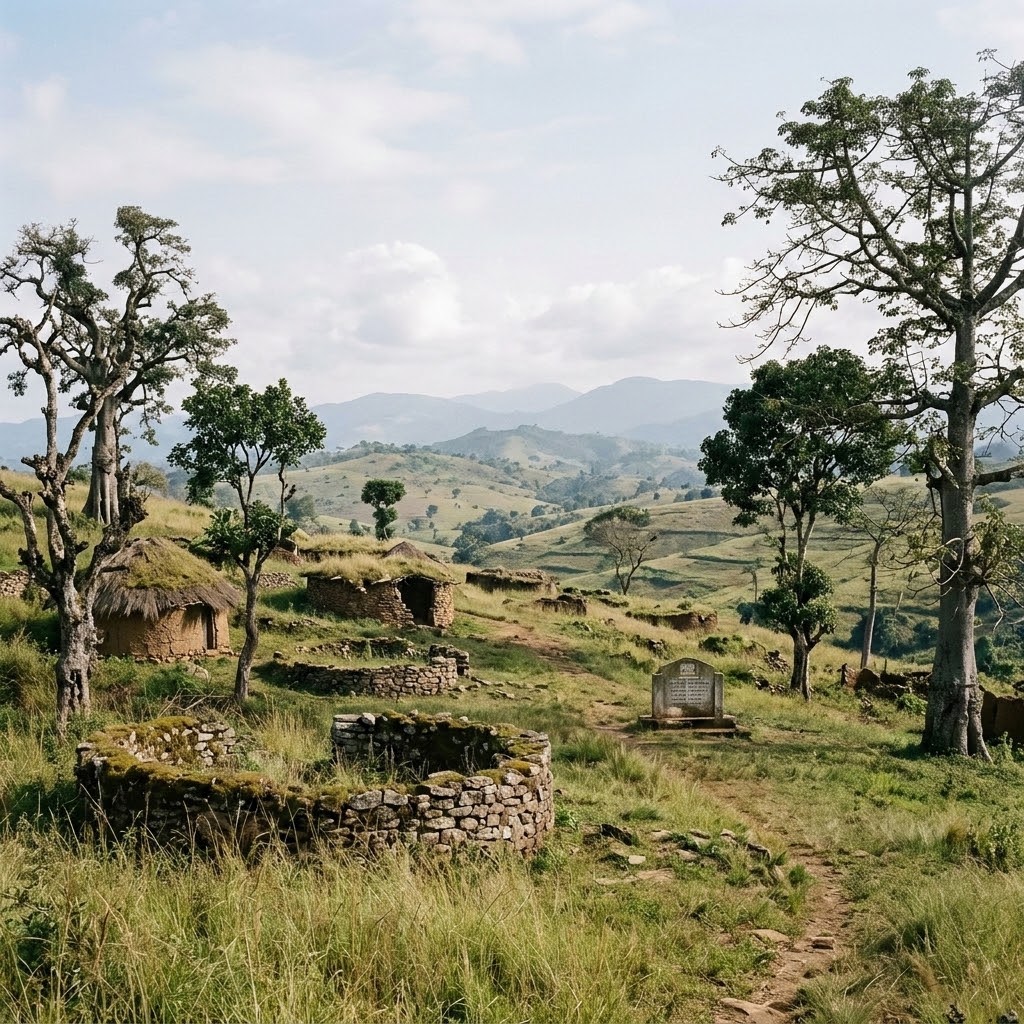
Fig 2: Tiywong remains an important place in Mbiame's historical and traditional memory
Following the establishment of Mbiame Fondom, the people moved through several settlements.
According to Mbiame historical accounts, the first permanent palace was constructed at Tiywong after earlier settlement at Ngou'Nso and Foutaam (Taam). The settlement did not remain secure for long.
Mbiame tradition records attacks by Bamoun forces, alongside Fulani raids, which contributed to further migration.
The people moved towards the Mbaw Plain, also known as Mbonso, and later to Romelay-Kovkinkar, where a second permanent palace was established under Fon Leh Mbijaame.
Fon Leh Mbijaame disappeared in 1422, according to the Mbiame genealogy.
Tiywong as a Sacred Place
Despite the migration away from Tiywong, the place retained an important position in Mbiame historical memory.
It has remained associated with sacrifices and traditional rituals, making it more than simply an abandoned settlement.
Its continued significance demonstrates how places encountered during migration can remain embedded within the spiritual and cultural geography of a people.
The Death of a Bamoun in Mbiame
One of the oral traditions used to explain the long history of tension between Mbiame and Bamoun concerns the death of a Bamoun man in the Mbiame palace.
According to an account relayed by Nkongme Emmanuel (Taa Wanyu) in a 2022 interview, a Bamoun man married a Mbiame princess named Kinsenin.
The couple later came to present their twins to the Mbiame Fondom. The man was excessively proud during the occasion, to the point that his behaviour overshadowed those present, including the Fon of Mbiame. A confrontation followed, during which the Bamoun man lost his life. The account holds that the Bamoun regarded his death as an abomination and that the incident became another source of bitterness towards Mbiame.
This story is also alluded to in Berinyuy's Clash of Egos (2022). Given that the account is preserved primarily through oral tradition, it should be understood as part of Mbiame historical memory and traditional explanation of the conflict, rather than as an independently verified contemporary record.
The Killing of Fon Yaah at Mbolah
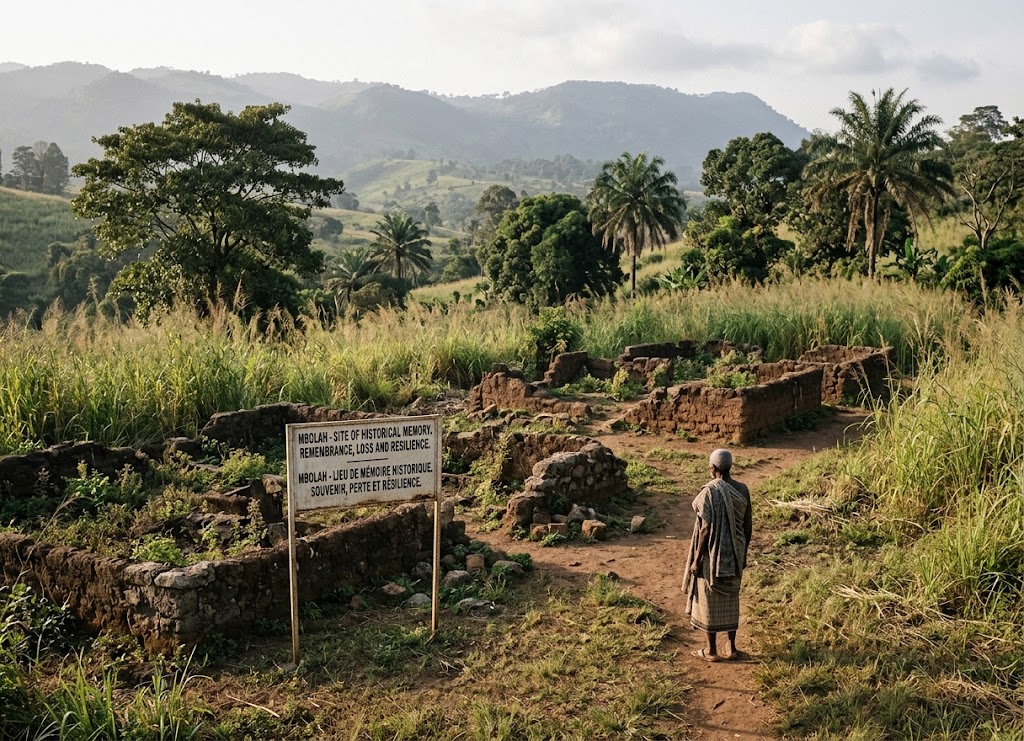
Fig 3: Mbolah remains deeply embedded in Mbiame historical memory as a place associated with the death of Fon Yaah
Among the most painful memories in Mbiame history is the killing of Fon Yaah at Mbolah. According to Mbiame historical tradition, Bamoun hostilities continued during the reign of Fon Yaah.
Following repeated attacks, Bamoun forces eventually overpowered Mbiame at Mbolah, where Fon Yaah was killed.
Mformi Kimi's 1960s manuscripts are among the sources associated with this account.
Mbolah: A Place of Historical Memory
The death of Fon Yaah in 1729 had consequences beyond the loss of a ruler.
It became part of the explanation for the prolonged instability to install a steady leadership that followed, spanning till 1829 when Fon Kailang rose to power.
Mbiame tradition remembers Mbolah as a place associated with profound loss. The location has subsequently been remembered as a land of no return, particularly through funeral songs and oral traditions.
The memory of Mbolah therefore remains central to understanding why the relationship between Mbiame and Bamoun has historically carried a degree of caution.
The Capture of Fon Kailang
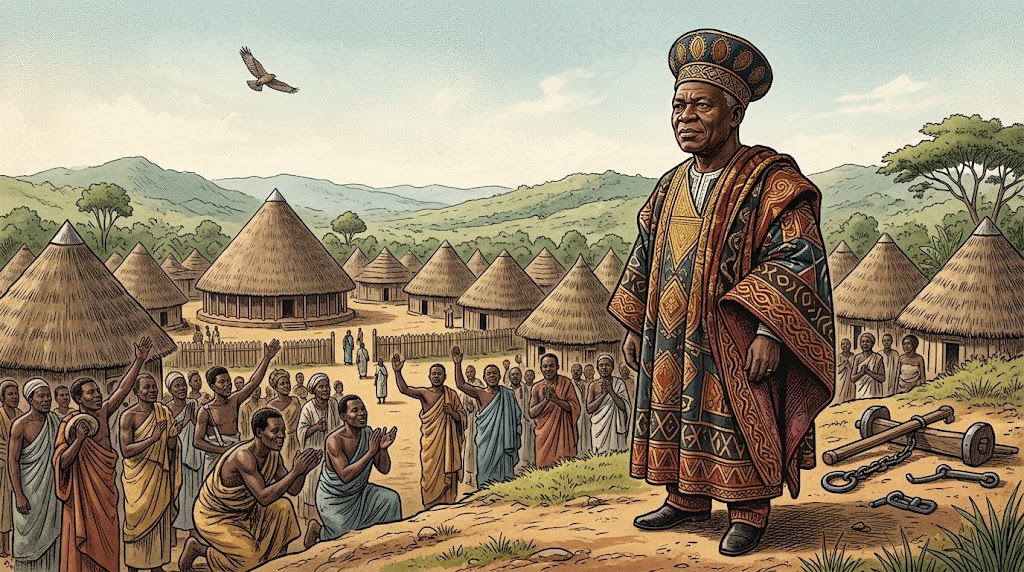
Fig 4: The story of Fon Kailang's captivity and return remains part of Mbiame oral tradition.
The conflict continued centuries later.
After a prolonged period of instability, Fon Kailang was enthroned in 1829.
According to Mbiame oral tradition, Bamoun attacks intensified during his reign and Fon Kailang was captured and taken to Bamoun territory as a war prisoner. With Fon Kailang believed unlikely to return, Fon Ndzeshasha assumed the throne from then till 1847.
The Story of Fon Kailang's Escape
Mbiame oral tradition preserves a remarkable account of Fon Kailang's escape.
According to the testimony of Shuufaay Kidzeh Mbiame, Tanyar (1912–2014) of the Ndzeshasha Royal lineage, Fon Kailang escaped from Bamoun captivity after transforming into a hawk.
The account associates the Fon with the local name in Bamoun, “Ghahum,” meaning hawk.
This tradition was also discussed in an interview with Pa Nji Oumarou Nchare, a Bamoun consultant and Director of the Museum and Archives, who recalled the tradition surrounding Fon Kailang and the name Ghahum, commonly known across the Bamoun community.
The story forms part of the oral traditions surrounding Fon Kailang's captivity and return. After returning to Mbiame, Fon Kailang recovered the throne and ruled again from 1847 to 1850, according to the Mbiame genealogy. He eventually disappeared at Romelay-Kovkinkar.
Bamoun Raids in Romelay-Kovkinkar
The disappearance of Fon Kailang did not bring an immediate end to the conflict.
During the reign of Fon Kima (1850–1860), Mbiame tradition records that Bamoun attacks intensified.
When Fon Njoka (1860–1890) assumed the throne, the pressure became increasingly difficult to withstand.
Mbiame eventually left the area and moved to Ntubaw in Ndu and then towards Mbinon in Noni. From Mbinon, the people later moved to Kai, near Kovifem.
It was at Kai that Mbiame encountered the Nso community and experienced another important chapter in its migration history. Thev two disagreed over mourning rites as Nwerong Nso and other authorities stood against the celebration of Kpu Ye Wiyi (Mbiame Cultural Festival). The encounter eventually contributed to Mbiame decision to move further and seek a settlement where its own traditional institutions could function independently.
The German Intervention
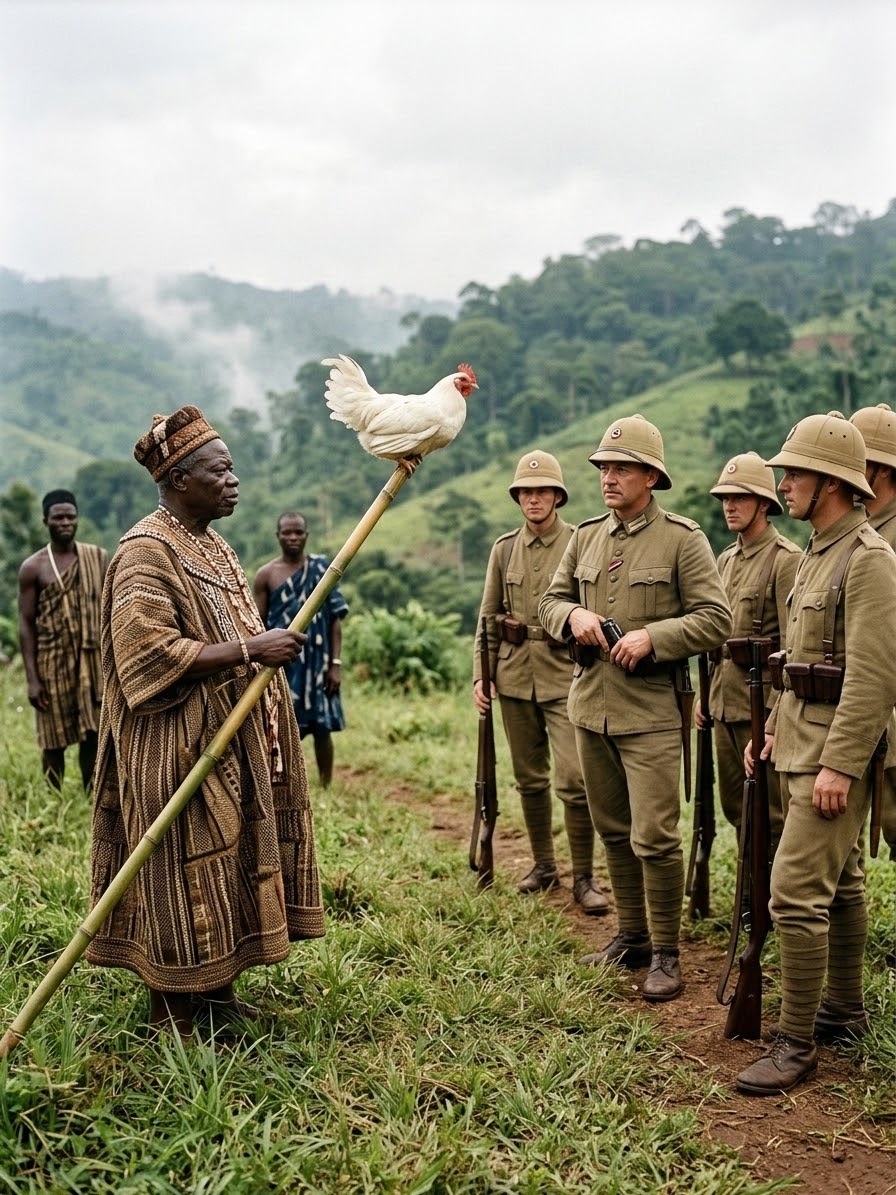
Fig 5: Mbiame tradition remembers Fon Taata Nweh I's white fowl as a symbol of his appeal for peace.
The eventual return of Mbiame to its traditional homeland is another important part of the oral history.
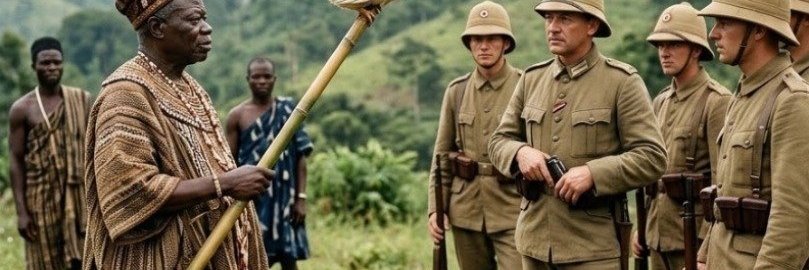
According to Mbiame tradition, during the reign of Fon Taata Nweh I, the Germans were engaged in conflict with Nso under Fon Ngah.
As the conflict intensified, Fon Ngah reportedly fled his palace.
Fon Taata Nweh I of Mbiame intervened, seeking an end to the hostilities against his brother.
The White Fowl as a Symbol of Peace
Mbiame oral tradition holds that Fon Taata Nweh I approached the Germans carrying a white fowl on a bamboo stick.
The white fowl represented peace and his appeal for the bloodshed to stop.
According to the tradition, the Germans eventually listened to him and learned that he was the Fon of Mbiame.
Fon Taata Nweh I explained that Mbiame traditional settlement was at Romelai-Kinkar in Mbiame but that his people had been unable to remain there because of repeated Bamoun attacks.
The account holds that the Germans subsequently allowed Fon Taata Nweh I and his people to return to their traditional territory.
“Msi Mo Nsai” — I Am in My Land
One of the memorable expressions preserved in Mbiame oral tradition is associated with the return journey.
According to the tradition, when Fon Taata Nweh I and his delegation crossed the River Kinsa'an, the Fon declared:
“Msi mo nsai” — “I am in my land.”
The expression is remembered as a powerful affirmation of the Fon's connection to the ancestral territory.
The Germans are also said, in the oral tradition, to have warned the Bamoun against further attacks on Mbiame.
The return marked a major change in the relationship between the two communities.
After generations of warfare and displacement, Mbiame was finally able to establish itself again in its traditional territory.
From Conflict to Neighbourly Coexistence
The return of Mbiame to its present territory did not erase the history of the past.
It did, however, create the conditions for a different kind of relationship.
Mbiame and Bamoun now share a boundary along the southern part of Mbiame Fondom.
Villages including Lip, Ngorin, Jamoh and Mbonso are among the areas associated with this southern frontier.
People from both communities have also settled across the traditional boundary.
Bamoun people live on the Mbiame side, while Mbiame people also live within Bamoun territory.
This everyday interaction provides a different picture from the warfare remembered in the historical traditions.
A Brotherhood of Mixed Feelings
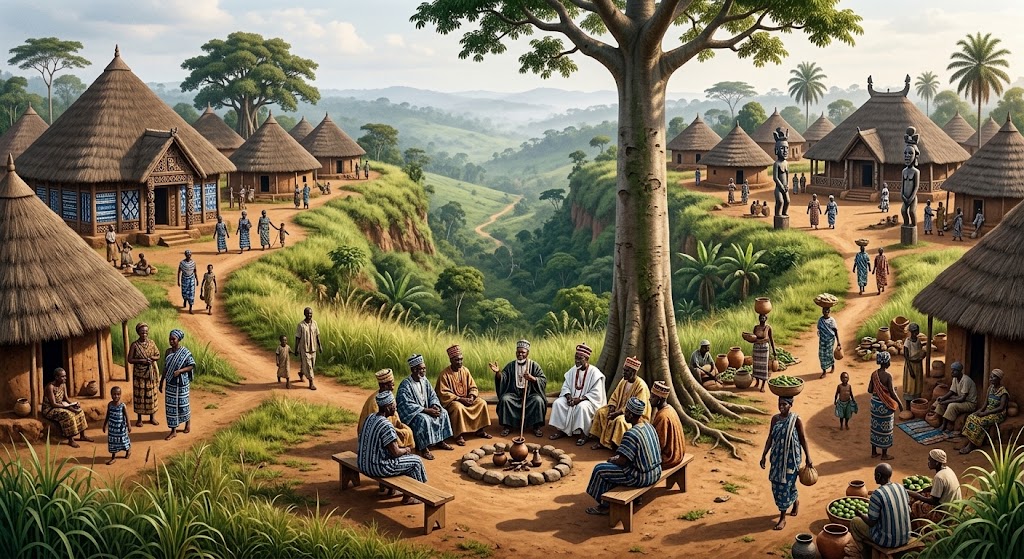
Fig 6: Today, Mbiame and Bamoun communities live as neighbours along the southern boundary of Mbiame.
The relationship between Mbiame and Bamoun can therefore be described as a brotherhood of mixed feelings.
The sense of brotherhood comes from their shared ancestral traditions and the historical memory of communities that emerged from the same wider Tikar homeland.
The caution comes from centuries of conflict and the memory of deaths, displacement and attacks.
For Mbiame, events such as the death of Fon Yaah at Mbolah are not simply distant historical episodes. They remain part of the cultural memory of the Fondom.
At the same time, the present relationship is not defined exclusively by those memories.
Families interact, communities trade, people marry and populations live across both sides of the boundary.
The relationship has therefore evolved from one shaped heavily by warfare to one characterized by neighbourly coexistence, cautious trust and shared ancestry.
The Question of Traditional Reconciliation
Within Mbiame oral tradition, there is a belief that the historical wounds between Mbiame and Bamoun require more than ordinary neighbourly relations to be fully addressed.
A traditional process of land cleansing and reconciliation has been proposed as a way of confronting the memory of past bloodshed.
The purpose would not simply be ceremonial.
Such a process is understood within the tradition as a way of acknowledging what happened, cleansing the historical burden associated with the land and creating a stronger foundation for future relations.
It could also open the way for greater traditional and cultural communion, including renewed royal visits and interaction between the two communities.
This remains a matter for the traditional authorities and communities concerned. It should therefore be understood as a proposed or anticipated traditional process, rather than an event that has already taken place.
Conclusion
The relationship between Mbiame and Bamoun cannot be understood simply as friendship or hostility.
It is a relationship shaped by shared ancestry, separation, warfare, migration, loss and eventual coexistence.
From the events surrounding the River Mape to the attacks on Tiywong and Romelay-Kovkinkar, the death of a Bamoun in Mbiame tradition, the killing of Fon Yaah at Mbolah and the capture of Fon Kailang, Mbiame historical memory preserves numerous episodes that help explain the caution that has sometimes characterized the relationship. Yet history has not prevented the two communities from becoming neighbours again. Today, Mbiame and Bamoun share boundaries and everyday social relations. Many people live across the traditional divide, demonstrating that the relationship has moved beyond the conflicts of earlier centuries.
For Mbiame tradition, however, true reconciliation requires that the memory of past bloodshed be addressed in a culturally meaningful way. A traditional process of cleansing and reconciliation, if undertaken by the appropriate authorities and communities, could provide an important symbolic step towards transforming a long history of mixed feelings into a stronger relationship grounded in shared ancestry, mutual respect, peace and cultural communion.
References
- Mbiame Palace Archives. Past and Current Documentation.
- Mformi Kimi. 1960s Manuscripts and Archives.
- Berinyuy, Jude. (2022). Clash of Echoes. Kansas, USA: Mairaclaire Publishing.
- Berinyuy, Jude. (2025). Mbiame in the Beginning: Yesteryears and Nowadays. Yaounde: Nyaa Publishers.
- Berinyuy, Jude. (2026). “Preservation of Cultural Heritage or Misappropriation? A Sociolinguistic Probing of Naming among Some Tikar Tribes.” Frontiers International Journal of Interdisciplinary Studies (FIJIS), Vol. 1(2), July 2026, pp. 26–43.
- Taa Wanyu (Nkongme Emmanuel). Interviewed in 2022 by Max Production.
- Pa Nji Oumarou Nchare. Bamoun consultant and Director of the Museum and Archives. Interviewed in 2025 by Mbiame Culture and Entertainment Page.
- Shuufaay Kidzeh Mbiame (1912–2014). Oral account preserved through the Ndzeshasha Royal lineage.
Author: JUDE T. BERINYUY
Editor(s): AYUVEA ANGELO T. / JUDE T. BERINYUY