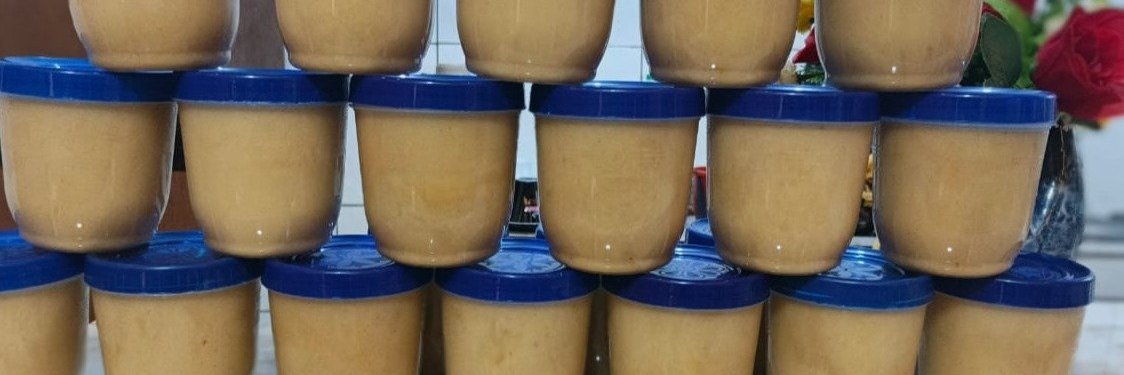
At a Glance
- Location: Mbiame Fondom, Bui Division, North West Region of Cameroon
- Main Products: Brown honey, cream white honey, pure white honey, forest (tree) honey and ground honey
- Other Valuable Bee Product: Royal jelly
- Sources of Nectar: Forest trees, eucalyptus, coffee, avocado, wildflowers and cultivated crops
- Uses: Food, traditional medicine, income generation and cultural purposes
- Harvesting Methods: Traditional and modern beekeeping techniques
- Economic Importance: Supports household livelihoods and local trade
Introduction
The rich natural environment of Mbiame Fondom supports the production of several distinctive types of honey, each with its own colour, flavour, texture and characteristics. The diversity of flowering plants, forests, eucalyptus plantations and cultivated crops provides honey bees with abundant nectar throughout much of the year, resulting in honey of exceptional quality.
For generations, honey has been valued in Mbiame not only as food but also as a traditional remedy, a source of household income and an important agricultural product. Depending on the floral source, season and bee species, the honey produced can vary considerably in appearance and taste.
This article explores the principal types of honey found in Mbiame Fondom and explains what makes each one unique.
🍯 Did You Know?
The colour of honey is influenced largely by the flowers visited by bees. Even within the same locality, honey harvested at different times of the year may vary from almost white to deep amber depending on the dominant nectar sources.
Why Mbiame Produces Different Types of Honey
Several natural factors contribute to the diversity of honey produced in Mbiame.
These include:
- Rich floral diversity.
- Forest vegetation.
- Eucalyptus plantations.
- Coffee and avocado blossoms.
- Wild flowering plants.
- Seasonal changes in flowering.
- Different species of bees.
Because bees collect nectar from different plants at different times of the year, each honey harvest may possess its own unique colour, aroma and flavour.
1. Brown (Dark) Honey
Brown honey is the most commonly produced honey in Mbiame and is widely appreciated for its rich taste and nutritional value.
It is usually produced when bees collect nectar from forest trees, eucalyptus, coffee blossoms, avocado flowers and numerous wild plants.
_p7tjYje.jpg)
Fig 1: Brown Honey from Mbiame
Characteristics
- Deep amber to dark brown colour.
- Thick consistency.
- Rich floral aroma.
- Strong natural flavour.
- High mineral and antioxidant content.
Common Uses
Brown honey is commonly used:
- As a natural sweetener.
- For direct consumption.
- In traditional herbal preparations.
- To soothe coughs and sore throats.
- As a natural source of energy.
Harvesting
Traditional and modern beekeepers harvest brown honey only after the honeycombs have matured and been sealed by the bees. The honey is then extracted, filtered and stored in clean containers to preserve its quality.
2. Cream White Honey
Cream white honey is lighter in colour and has a smoother texture than dark honey. It is often associated with nectar collected from certain highland flowering plants and cultivated crops.
Natural crystallisation may also give it a soft, creamy appearance.
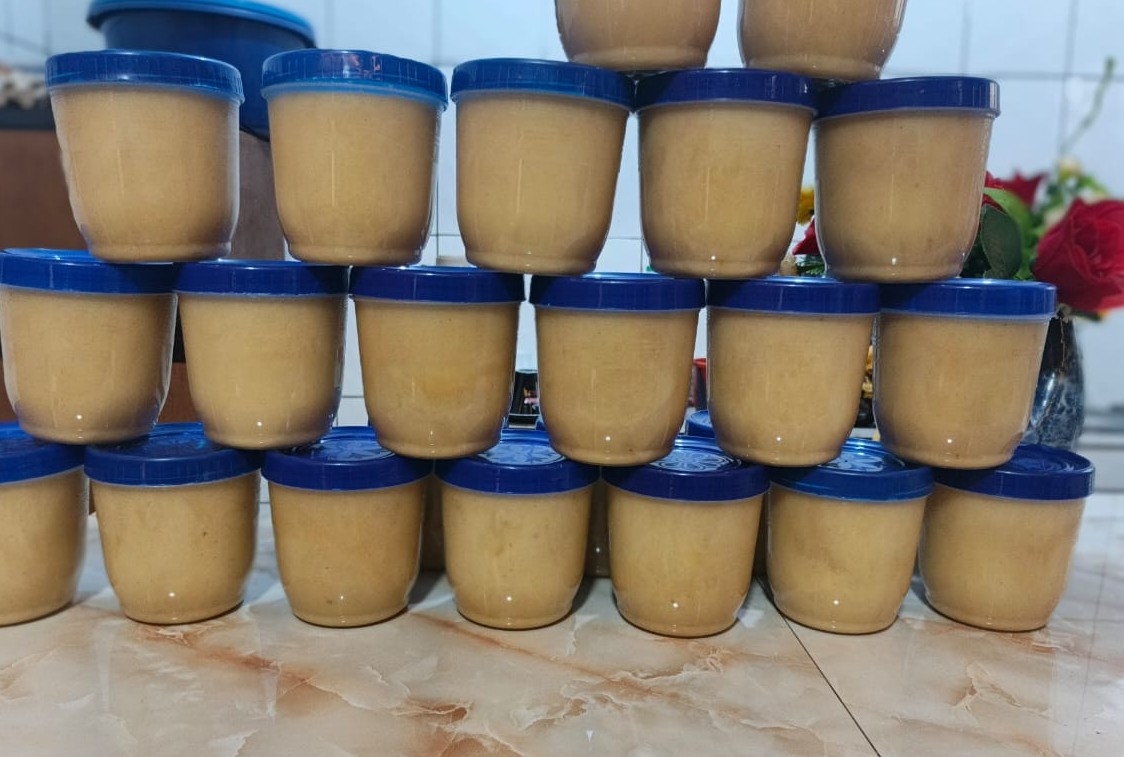
Fig 2: Mbiame Cream white Honey
Characteristics
- Creamy white to light golden colour.
- Mild flavour.
- Smooth texture.
- Fine crystal structure.
- Attractive appearance.
Common Uses
Cream white honey is popular for:
- Table use.
- Spreading on bread.
- Sweetening tea and other beverages.
- Premium honey packaging.
Harvesting
After the honey cells are fully sealed, the combs are harvested carefully, extracted under hygienic conditions and stored properly to preserve their smooth consistency.
3. Pure White Honey
Pure white honey is among the rarest honey varieties occasionally produced under favourable flowering conditions.
Its distinctive colour results from bees collecting nectar predominantly from specific flowering plants that naturally produce very light-coloured honey.

Fig 3: Mbiame White Honey
Characteristics
- White or ivory appearance.
- Mild sweetness.
- Delicate floral aroma.
- Smooth texture.
- Premium quality.
Common Uses
Pure white honey is highly valued for:
- Direct consumption.
- Gift packaging.
- Specialty markets.
- Premium honey products.
Harvesting
Because of its rarity, careful harvesting and proper storage are essential to preserve its natural appearance and purity.
3. Forest (Tree) Honey
Forest honey, commonly known in Mbiame as tree honey, is harvested from honey bee colonies nesting naturally inside hollow trees, fallen logs, rock cavities or traditional beehives suspended in trees.
It has been harvested by communities in Mbiame for generations and remains one of the most valued traditional honey products.
Characteristics
- Golden to dark amber colour.
- Rich floral aroma.
- Strong natural flavour.
- High pollen content.
- Traditional mountain honey.
Importance
Forest honey is valued because it:
- Provides nutritious food.
- Generates household income.
- Supports traditional medicine.
- Reflects the long history of beekeeping in Mbiame.
Harvesting
Harvesters carefully locate occupied trees during the flowering season. Smoke is used to calm the bees before mature honeycombs are removed.
Whenever possible, brood combs are left intact to allow the colony to recover naturally.
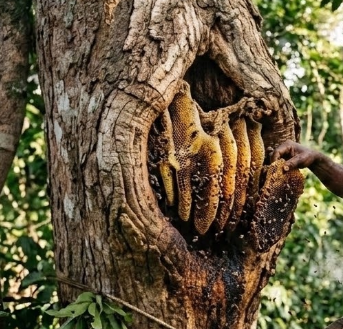
Fig 4: Honey harvesting from a tree hive.
4. Ground Honey
Ground honey is produced by stingless bees that build their nests underground, inside termite mounds or in cavities close to the ground.
Although produced in relatively small quantities, it is highly valued because of its rarity and distinctive flavour.
Characteristics
- Dark amber colour.
- More liquid than ordinary honey.
- Sweet with a slightly sour taste.
- Produced in limited quantities.
Traditional Importance
Ground honey has long been valued in indigenous medicine. In many communities, it has traditionally been used in the care of wounds and certain eye conditions, although scientific evidence for some traditional uses remains limited.
Harvesting
Harvesters carefully open underground nests and remove only the honey pots, taking care to preserve as much of the colony as possible so that it can continue producing honey.
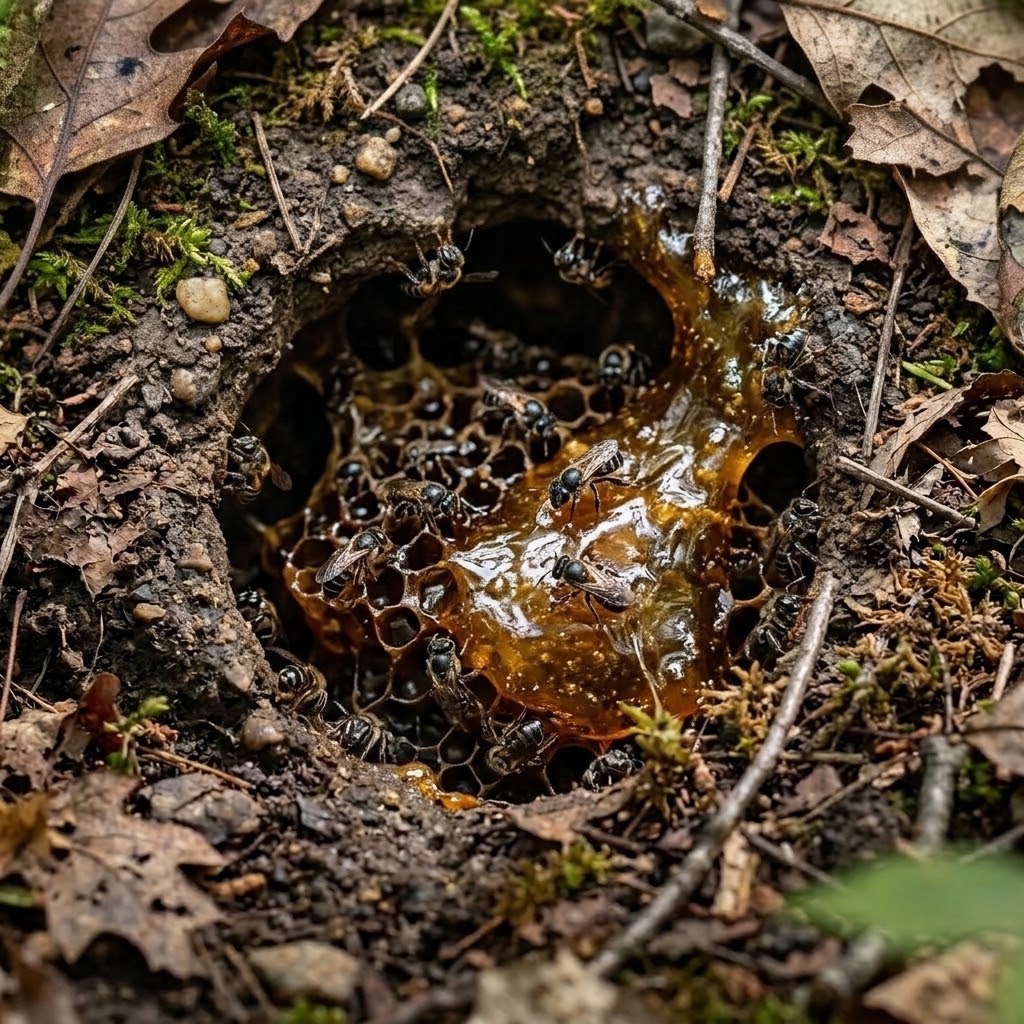
Fig 5: Ground Honey from stingless bees
5. Royal Jelly – More Than Honey
Although often mentioned alongside honey, royal jelly is not a type of honey. It is a creamy, nutrient-rich substance produced by young worker bees to feed queen larvae and the adult queen bee.
Royal jelly is one of the most valuable products of the beehive because of its nutritional composition and commercial value.
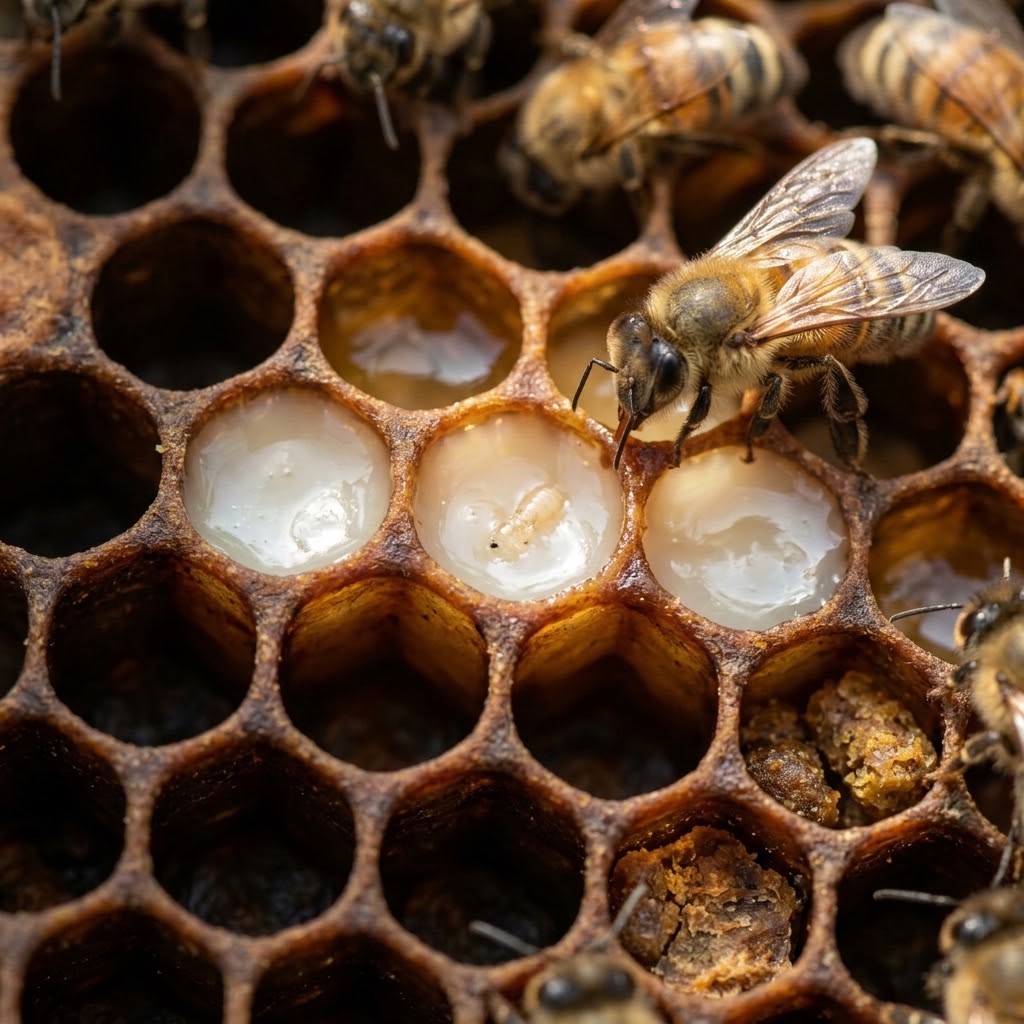
Fig 6: Royal Jelly
Sustainable Honey Harvesting
Sustainable harvesting helps protect bee populations while ensuring continued honey production.
Good practices include:
- Harvesting only mature, sealed honeycombs.
- Avoiding destruction of bee colonies.
- Leaving sufficient honey for the bees.
- Using clean harvesting equipment.
- Wearing protective clothing.
- Storing honey in clean food-grade containers.
- Conserving forests and flowering plants.
Responsible beekeeping benefits both the environment and future honey production.
Economic Importance of Honey Production
Honey production contributes significantly to the rural economy of Mbiame.
It provides:
- Household income.
- Employment opportunities.
- Food and nutrition.
- Raw materials for traditional medicine.
- Products for local and regional markets.
Growing demand for natural honey also creates opportunities for improved processing, branding and value addition.
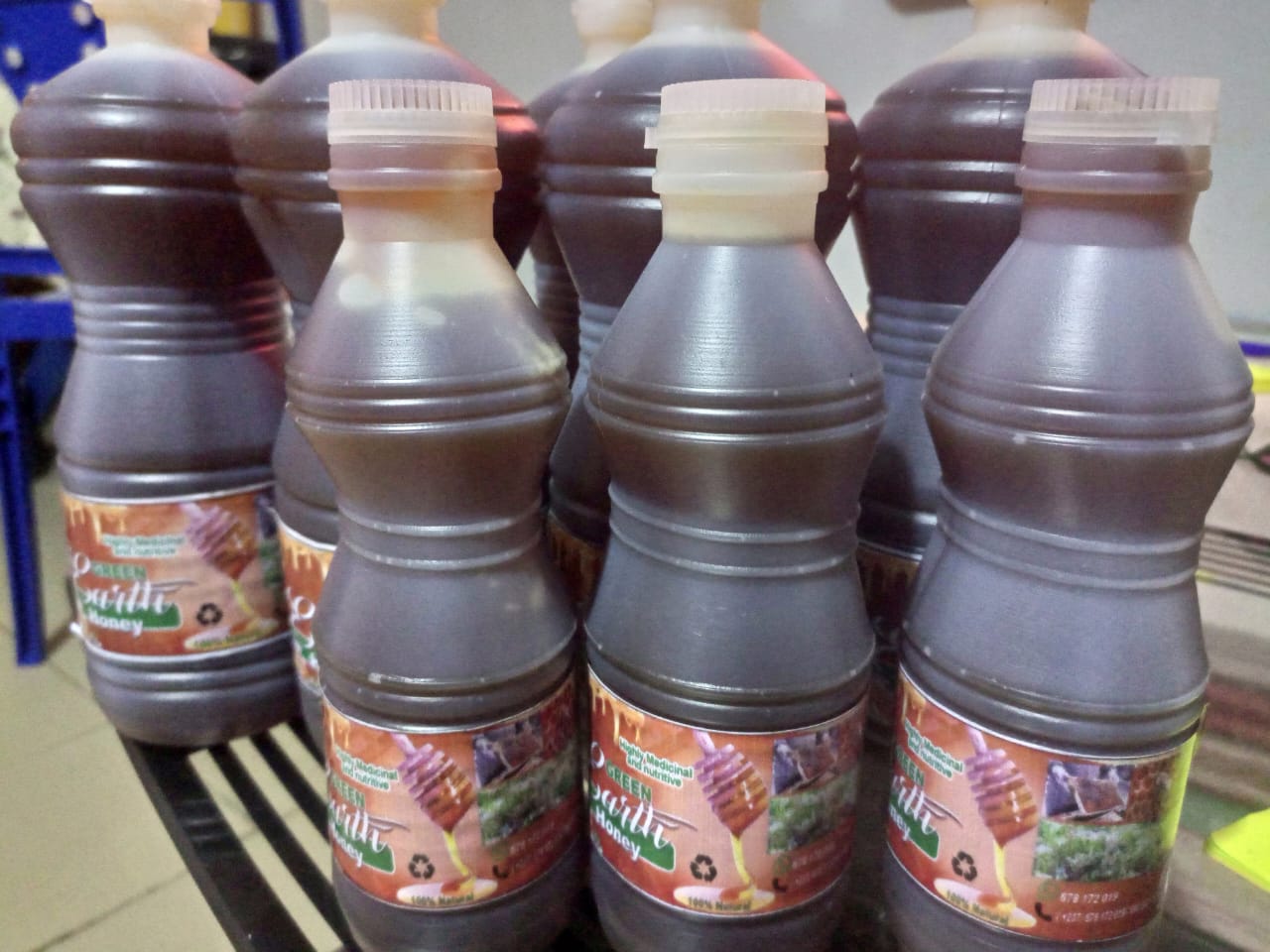
Fig 7: Packaged Brown Mbiame Honey for Marketing
Conclusion
The diverse landscapes and rich floral resources of Mbiame Fondom support the production of several distinctive types of honey, each possessing unique characteristics and economic value. From the widely produced brown honey to the rare pure white honey and highly valued ground honey, these products reflect the richness of the Fondom's natural environment and the knowledge of its beekeepers.
By preserving traditional harvesting practices while adopting modern beekeeping methods, Mbiame can continue to strengthen its reputation as a producer of high-quality honey and other valuable bee products for generations to come.
References
- Mbiame Council Development Plan – North West Region, Bui Division (PNDP, May 2012)
- Mbiame Council Baseline Report (2018)
- Jaibe Killian, Beekeeper in Mbiame with over 20 years of experience
- Sheey Etienne Fonyuy , Beekeeper and Proprietor of Sony Organic Honey Enterprise.
Author: WONGIBE LEONARD
Co-author: JUDE T. BERINYUY
EDITOR(s): AYUVEA ANGELO T.